

Here is something most people do not know: the snake plant is one of the top five most popular houseplants in the entire United States. It sits in living rooms, home offices, hospital lobbies, yoga studios, and apartment corners from New York to Los Angeles. Millions of Americans own one.
And almost none of them know what it actually means.
That gap between ownership and understanding is worth closing. Because the snake plant — also known as Sansevieria, mother-in-law’s tongue, and Saint George’s sword — is not just a tough, low-maintenance houseplant that happens to look good in a modern interior. It is one of the most symbolically loaded plants in the world, carrying thousands of years of spiritual meaning, protective energy, and cultural significance across three continents.
There is a reason it keeps showing up everywhere. There is a reason people feel drawn to it without quite knowing why. And there is a reason ancient cultures in Africa, Asia, and beyond treated this plant as something worth keeping close.
This guide is going to tell you exactly what that reason is.
Quick answer:
- The snake plant symbolizes cleansing, protection, and resilience — making it one of the most spiritually meaningful plants you can keep in your home
- In feng shui, it is considered a protective plant that absorbs negative energy and channels positive chi when placed correctly
- Across African, Asian, and Western traditions, the snake plant carries powerful symbolic associations with good luck, strength, and purification
What Does the Snake Plant Symbolize? Core Meanings
Before diving into specific cultural traditions, it helps to understand where snake plant symbolism comes from at its root. And the answer is surprisingly simple: it comes from the plant itself.
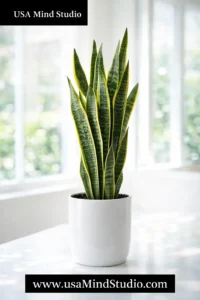
Look at a snake plant for a moment. Really look at it. The leaves rise straight up — tall, firm, unwavering. They do not droop. They do not bend. They stand upright with a kind of quiet confidence that feels almost intentional. This plant does not require constant attention, perfect conditions, or ideal lighting. Cut back on its water. Ignore it for weeks. Put it in a dark corner. It will still be standing when you come back.
That is exactly what it symbolizes.
The core snake plant symbolic meaning encompasses cleansing, protection, resilience, good luck, strength, and purification. These are not arbitrary associations dreamed up by spiritual practitioners. They flow directly from the plant’s actual nature — the way it behaves, survives, and shows up consistently no matter what is happening around it.
Think of it this way: the snake plant does not demand attention to thrive. It simply grows — quietly, steadily, without drama — regardless of its circumstances. That is the kind of inner strength most of us spend years trying to develop. This plant has it by design.
Its name alone carries multiple symbolic layers. The word “snake” in its name connects it to the ancient and universal symbolism of the serpent — transformation, renewal, and the shedding of what no longer serves you. Its scientific name, Sansevieria, derives from the Italian phrase meaning “to cut off” — a reference widely interpreted as the symbolic severing of negative energy or the cutting of ties with past difficulties.
Snake Plant Symbolism in Feng Shui
In feng shui — the ancient Chinese practice of arranging living spaces to optimize the flow of life energy — the snake plant holds a genuinely remarkable position. It is one of only a small number of houseplants considered powerful enough to not just passively carry good energy, but to actively absorb and neutralize negative energy in a space.
According to feng shui principles, the snake plant’s sharp, sword-like leaves work as energetic filters. They cut through stagnant or harmful chi (life force energy), promote positive energy flow, and create conditions for clarity, focus, and forward movement in whoever lives or works nearby. Lively Root, a respected US-based plant resource, describes the snake plant’s feng shui role as signifying “positive energy, protection, and purification” with leaves that “cut through negative energy, promoting positive chi.”
In the Bagua map — the feng shui grid used to map energy zones in a home — the snake plant is particularly recommended for the southeast corner, which is the wealth and abundance zone. Placing the plant here is believed to support financial flow, career growth, and the attraction of new opportunities.
Here is how placement works room by room in feng shui practice:
Front entrance or main door: The most universally recommended placement across all feng shui traditions. The snake plant acts as a guardian at the threshold — a protector standing watch between the outside world and your inner sanctuary.
Home office or workspace: The plant’s energy absorbs stress, conflict, and mental fatigue while promoting clarity of thought. Its upward growth is also associated with career ambition and upward movement.
Southeast corner of any room: Aligned with the wealth zone on the Bagua map — supports prosperity, abundance, and financial energy.
Bathroom: Neutralizes the stagnant or draining energy associated with this space, helping maintain energetic balance throughout the home.
Bedroom: This is where feng shui traditions diverge. Some classical practitioners caution against sharp-leaved plants in the bedroom, categorizing them as “sha chi” — cutting energy that may disturb rest. Others recommend the snake plant specifically for its protective quality during sleep and its unique ability to release oxygen at night (unlike most plants, which only release it during the day). The general wisdom: if you sleep well with it present, keep it. If not, move it to another room.
The wood element energy carried by the snake plant’s upward-pointing leaves connects it to growth, vitality, and expansion in feng shui philosophy — making it one of the few plants that brings both protective and growth-oriented energy simultaneously.
For more on how spiritual energy and natural signs show up in everyday spaces, explore our guide on {INTERNAL_LINK: anchor text = “spiritual signs and energy in everyday life” | suggested URL = https://usamindstudio.com/spiritual-signs/}.
The African Roots of Snake Plant Symbolic Meaning
Most Americans who own a snake plant have no idea where it comes from. And that origin story matters — because it is the foundation of everything the plant symbolically represents.
The snake plant is native to West Africa — specifically the tropical regions stretching from Nigeria through the Congo. It has been cultivated and valued in this region for centuries, long before it became a staple of American home decor.
In its original African context, the snake plant was far more than a decorative item. It was a protective plant — kept around homes and in sacred spaces to ward off evil spirits, break curses, and create a barrier of positive energy between the household and whatever negative forces might approach from outside.
In Yoruba tradition of Nigeria, the snake plant has been associated with the orisha Ogun — the powerful deity of iron, warfare, labor, and protection. Bringing a snake plant into or around the home was understood as inviting Ogun’s protective energy into that space. It was a living talisman, not just a plant.
In parts of Central and Southern Africa, the snake plant was also used medicinally and ceremonially. Healers incorporated it into purification rituals and offerings to ancestral spirits, recognizing it as a plant that bridged the material world and the spirit world. Fiber extracted from its leaves was used to make rope, baskets, and even bowstrings — reinforcing its symbolic associations with strength and reliability.
The plant’s common name in some African traditions translates roughly as “good luck plant” — a name that traveled with the plant as it spread around the world through centuries of exploration and trade. That name stuck. And when you understand where it came from, you understand why.
Snake Plant Symbolism Across Asian Cultures
As the snake plant traveled from Africa into Asia, it accumulated new layers of symbolic meaning — each culture adding its own interpretation while maintaining that core theme of protection and positive energy.
In China, the snake plant is considered one of the eight most auspicious plants in feng shui practice. According to traditional Chinese belief, placing a snake plant near the entrance of a home allows the passage of the eight virtues bestowed by the eight gods — a specific set of divine qualities including longevity, prosperity, intelligence, beauty, art, poetry, health, and strength. Each virtue enters with the positive chi the plant attracts. For this reason, snake plants are frequently placed at doorways and in entryways in Chinese homes and businesses.
In Japan, the snake plant carries its own distinctive name and identity. It is called tora no o — which translates beautifully as “tiger’s tail” — and is associated with strength, power, and longevity. Gifting a snake plant in Japan carries the message of wishing the recipient a long, strong, and prosperous life.
In Korea and Vietnam, the snake plant is a common and respected addition to homes and businesses, planted as a symbol of good fortune, protection, and steady prosperity.
This brings us to one of the most fascinating intersections of ancient symbolism and modern science. In 1989, NASA scientists — led by environmental researcher Dr. Bill Wolverton — conducted a landmark study on indoor plants and air quality, originally designed to find natural ways to purify the air in sealed space stations. The snake plant was one of the plants tested. The results showed it could remove toxins including benzene and formaldehyde from the air in a sealed chamber. The ancient symbolism of the snake plant as a purifier and cleanser suddenly had a scientific foundation. (NASA Clean Air Study — Wikipedia)
One important note: subsequent research has clarified that in a typical home with normal airflow, you would need many plants to match the effect seen in NASA’s sealed laboratory chambers. But the symbolism connection remains striking: a plant that cultures around the world have called a purifier for thousands of years was confirmed by NASA scientists to actually remove harmful substances from the air.
[🖼️ IMAGE PLACEHOLDER #2 — Multiple snake plants in a serene Asian-inspired interior | Alt text: “snake plant symbolism feng shui Asian cultures” | Title: Snake Plant Asian Symbolism | Caption: In Chinese and Japanese traditions, the snake plant is one of the most auspicious plants you can keep at home | Description: Multiple snake plants arranged in a serene Asian-inspired interior with bamboo and stone elements representing good fortune | Image Generation Prompt: “Multiple snake plants in terracotta pots arranged in a serene Asian-inspired interior with bamboo blinds, smooth stones, and warm candlelight, peaceful and spiritual atmosphere, photorealistic”]
For more on what the snake animal itself symbolizes across cultures and spiritual traditions, explore our guide on {INTERNAL_LINK: anchor text = “snake symbolism and what it really means” | suggested URL = https://usamindstudio.com/snake-symbolism/}.
Myth vs. Truth: Is the Snake Plant Bad Luck?
Let us address this directly — because it is one of the most searched questions about the snake plant in America, and the misinformation surrounding it deserves to be cleared up.
The myth: Some Western sources claim the snake plant brings bad luck, arguing that its pointed leaves carry aggressive or cutting energy, and that anything with “snake” in its name should be kept out of the home.
The truth: This claim has no basis in any of the cultures where the snake plant actually originates or where it has been used for centuries. It is not supported by African tradition. It is not supported by Chinese feng shui. It is not supported by Japanese culture. It is not supported by any serious study of plant symbolism.
The “bad luck” narrative appears almost exclusively in a handful of Western websites that misapplied a single feng shui concept — the idea that some sharp-leaved plants can generate “sha chi” (cutting energy) — without understanding the nuance behind it. Even in classical feng shui, the snake plant is recommended far more often than it is cautioned against. The consensus among serious practitioners is clear: when placed thoughtfully, the snake plant is overwhelmingly protective and positive.
What actually matters is this: intention and care. A healthy, well-tended snake plant — placed with positive intention, in a spot where it can grow — carries positive energy. A neglected, dying plant in feng shui is considered to carry stagnant energy regardless of its species. The plant reflects the energy you bring to it.
What It Means When Someone Gives You a Snake Plant
Receiving a snake plant as a gift is more meaningful than most people realize — because across multiple cultural traditions, the act of gifting a living plant carries specific symbolic weight.
As a housewarming gift, a snake plant says: May your new home be protected, prosperous, and filled with good energy from the very first day. It is a blessing wrapped in leaves and soil — one that will keep growing and protecting long after the boxes are unpacked.
As a workplace gift, the message shifts slightly: I wish you strength, clarity, and resilience in everything you are building here. The plant’s association with focus, ambition, and upward energy makes it a particularly thoughtful professional gift.
As a get-well gift, the snake plant carries layers of meaning. Its ancient symbolism of healing and protection, combined with its air-purifying qualities and its ability to release oxygen at night, makes it one of the most genuinely thoughtful recovery gifts available — a plant that works for the recipient while they rest.
As a gift to someone navigating difficulty, the snake plant delivers perhaps its most powerful message of all. It says, quietly and without drama: You are going to get through this. You are stronger than you know. Look at this plant — it thrives under any conditions. So do you.
In feng shui gifting tradition specifically, giving a living plant is considered one of the most auspicious gifts possible. You are not just giving an object. You are giving growing, breathing, living positive energy — something that will continue to benefit the recipient for years.
[🖼️ IMAGE PLACEHOLDER #3 — A beautifully potted snake plant with a kraft paper bow | Alt text: “snake plant gift symbolism meaning good luck” | Title: Snake Plant as a Gift | Caption: Gifting a snake plant carries a meaningful message of protection, resilience, and good energy | Description: A beautifully potted snake plant with a simple ribbon bow on a wooden table representing a thoughtful symbolic gift | Image Generation Prompt: “A beautifully potted snake plant with a simple kraft paper bow, placed on a warm wooden table with soft morning light, gift-giving atmosphere, clean and warm aesthetic, photorealistic”]
Snake Plant Symbolism in the Home: Room by Room
Understanding the symbolism of the snake plant is one thing. Knowing how to use that symbolism intentionally in your own home is another. Here is a practical breakdown of what each placement means and what energy it is intended to support:
Living room: Protection and positive energy for everyone who gathers in the space. The snake plant here acts as a quiet guardian of the household’s collective energy — absorbing interpersonal friction, clearing stagnant air, and maintaining a baseline of calm.
Home office: Clarity, focus, and the absorption of stress. The plant’s upward growth symbolizes career ambition and forward movement. Many Americans who work from home report feeling calmer and more focused with a snake plant nearby — which may be partially symbolic, partially the result of cleaner air.
Bedroom: Protection during sleep, release of oxygen throughout the night, and support for the subconscious mind. The bedroom snake plant is a guardian of your most vulnerable hours — standing watch while you rest and process the events of the day.
Kitchen: Purification of a space where food — literally the substance of life — is prepared. The kitchen snake plant symbolizes the cleansing of the energy that goes into nourishment.
Bathroom: Neutralization of draining or stagnant energy. The bathroom is a space of release and letting go, and the snake plant helps ensure that what leaves this space stays gone.
Front entrance: The guardian position. The most recommended placement across all traditions — standing at the threshold between the outside world and your inner sanctuary, the snake plant here is doing exactly what it has always done best.
Conclusion
Three things to remember about snake plant symbolism — and one thing to do with them.
First: The snake plant is one of the most symbolically powerful plants you can bring into your home. Not because of any single tradition, but because cultures across Africa, Asia, and the Western world have independently arrived at the same conclusion about it — that it protects, purifies, and supports the people who keep it close.
Second: Its symbolism is consistent. Protection. Resilience. Purification. Good luck. Strength that does not need to announce itself. These meanings appear whether you are looking through the lens of Yoruba tradition, Chinese feng shui, Japanese folklore, or the scientific findings of a NASA laboratory. That consistency is not a coincidence. It is the plant telling you, across centuries and continents, exactly what it is.
Third: The meaning comes from what the plant actually is. It survives where others fail. It stands tall without drama. It cleans the air around it quietly and steadily. It does not need perfect conditions to show up at its best. That is the symbol. That is the lesson.
Sometimes the most powerful thing in the room is the quiet one in the corner.
Call to Action
Do you have a snake plant at home — or are you thinking about getting one? Tell us where you keep yours in the comments. Which room? Which corner? And has anything shifted since it arrived?
And if you want to go deeper into the symbolic world of plants, animals, and natural signs, there is plenty more waiting for you right here on USA Mind Studio.
{INTERNAL_LINK: anchor text = “Explore flower and plant symbolism” | suggested URL = https://usamindstudio.com/flower-symbolism/}
{INTERNAL_LINK: anchor text = “Discover more animal and nature symbolism” | suggested URL = https://usamindstudio.com/animal-symbolism/}
FAQ
Q1: What does a snake plant symbolize? The snake plant symbolizes protection, resilience, purification, and good luck. Its upright, unwavering leaves represent inner strength — the kind that does not require perfect conditions to show up. Across African, Asian, and Western traditions, it is consistently regarded as a guardian plant that absorbs negative energy and brings positive chi into any space it occupies.
Q2: Is a snake plant good or bad luck? Good luck — overwhelmingly. The “bad luck” narrative is a Western misconception with no grounding in the cultures where the snake plant originates. In Chinese, Japanese, Korean, Vietnamese, and African traditions, the snake plant is unambiguously associated with good fortune, protection, and prosperity. In feng shui, it is recommended far more often than cautioned against.
Q3: What does the snake plant symbolize in feng shui? In feng shui, the snake plant represents protective energy, positive chi, and upward growth. Its sword-like leaves are believed to cut through and neutralize negative energy. Placed at the entrance of a home, it acts as a guardian. Placed in the southeast corner (the wealth zone), it is believed to attract abundance and prosperity.
Q4: What does it mean when someone gives you a snake plant? It depends on the context — but the core message is always positive. As a housewarming gift, it blesses a new home with protection and good energy. As a workplace gift, it wishes the recipient strength and clarity. As a get-well gift, it represents healing and care. In every context, giving a snake plant says: I want good things for you, and I am giving you something alive to grow alongside you.
Q5: Where should I place a snake plant for good energy? The front entrance is the most universally recommended placement — the guardian position. The southeast corner of any room supports wealth and abundance. The home office supports clarity and career growth. The bedroom supports protection and restful sleep. The key in all cases is that the plant is healthy and well-tended: in feng shui, a thriving plant carries positive energy, while a neglected one does not.
Internal Linking Summary
| Anchor Text | Suggested URL |
|---|---|
| spiritual signs and energy in everyday life | https://usamindstudio.com/spiritual-signs/ |
| snake symbolism and what it really means | https://usamindstudio.com/snake-symbolism/ |
| Explore flower and plant symbolism | https://usamindstudio.com/flower-symbolism/ |
| Discover more animal and nature symbolism | https://usamindstudio.com/animal-symbolism/ |
External Links Used (All High-Authority USA & Global Sources)
NASA Clean Air Study — Wikipedia | https://en.wikipedia.org/wiki/NASA_Clean_Air_Study | DA 90+ | Used for: scientific air purification research, Dr. Bill Wolverton citation, toxin-removal findings
Wikipedia — Dracaena trifasciata (Snake Plant) | https://en.wikipedia.org/wiki/Dracaena_trifasciata | DA 90+ | Used for: botanical overview, African origins, cultural history, naming origin
Lively Root — Snake Plant Meaning, Benefits & Symbolism | https://www.livelyroot.com/blogs/plant-care/snake-plant-meaning-benefits-symbolism | Respected US-based plant resource | Used for: feng shui symbolism detail and expert plant care context
Published on USAMindStudio.com | Category: Flower & Plant Symbolism | Primary Keyword: snake plant symbolism