In 1925, police dragged a woman out of a hotel in Philadelphia. She was sixty-one years old. Her crime was showing up at a meeting where people were selling carnations, and refusing to stop shouting about it.
This guide to carnation flower symbolism separates what history and tradition actually record from what the internet likes to repeat.
Her name was Anna Jarvis. She invented Mother’s Day. She had also, seventeen years earlier, personally made the white carnation mean “mother” in the United States, and by 1925 she was trying with everything she had to take it back.
Most writing about carnation flower symbolism hands you a list of meanings and lets you assume they drifted down from somewhere old. They did not. This one has a name, a date, and an address.
SUMMARY
- Core meanings: love, admiration, remembrance, motherhood, and distinction.
- The Mother’s Day link is one woman’s doing. Anna Jarvis sent 500 white carnations to a church in 1908 because they were her dead mother’s favorite. That is the whole origin.
- She spent the rest of her life fighting it. Lawsuits, arrests, and a campaign to have the holiday cancelled.
- Green carnations do not grow. They are dyed, and the meaning attached to them in the 1890s was one that could put a man in prison.
- Pink the color is named after this flower, not the other way around.
What Carnation Flower Symbolism Commonly Means
Love. Admiration. Remembrance. Motherhood. Distinction. That is the standard list and it is roughly correct.
What most articles will not tell you is how young all of it is. The carnation is one of the most symbol-loaded flowers in the Western world, and almost nothing it means today is ancient. The meanings are recent, mostly American and European, and nearly all of them were assigned inside the last hundred and fifty years.
That is not a weakness in the flower. It is the reason this story is worth telling. Most symbols come out of a slow process nobody wrote down. This one has a paper trail. We can say who decided, and when, and what they were trying to do.
Usually it turns out they did not get what they wanted.
The Woman Who Made the Carnation Mean Mother
Five Hundred White Carnations
Anna Jarvis’s mother, Ann Reeves Jarvis, was a serious woman. Starting in the 1850s she organized work clubs across West Virginia to improve sanitation and cut infant deaths. During the Civil War, those same clubs cared for wounded soldiers from both sides. Afterward she ran picnics to get Union and Confederate families sitting at the same table again.
She died in 1905.
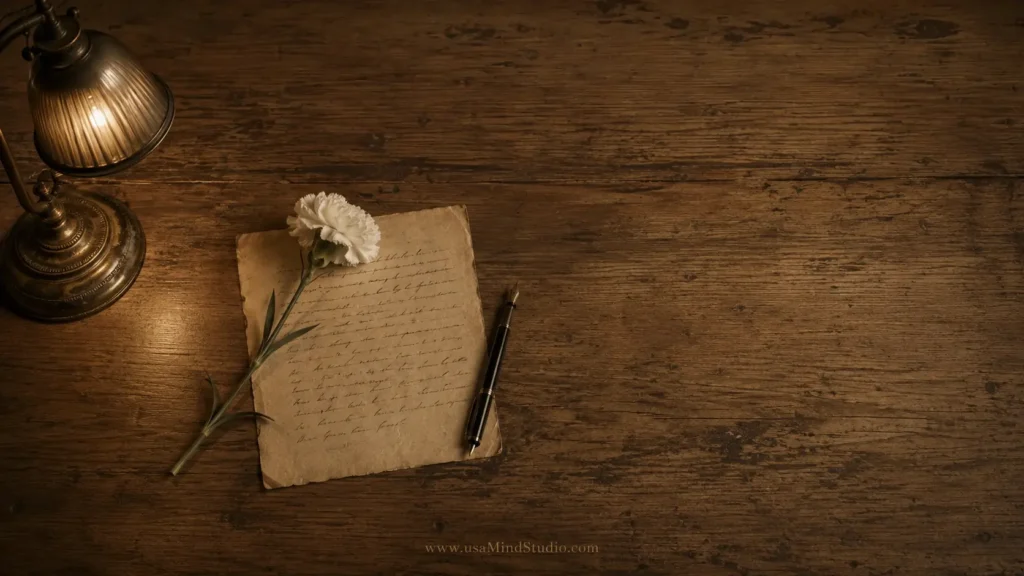
On May 10, 1908, the first Mother’s Day services were held at her church in Grafton, West Virginia, and at another church in Philadelphia, where Anna was living. Anna was not in Grafton that day. She sent five hundred white carnations instead, because white carnations were her mother’s favorite flower.
That is it. One woman, one dead mother, one flower she happened to like.
The Convention That Followed
A rule grew out of it fast. Wear a white carnation if your mother has died. Wear a red or colored one if she is still alive.
Millions of Americans followed a rule invented for one family’s grief, and most of them never knew whose grief it was.
Woodrow Wilson made it a national holiday in 1914. Jarvis was particular about the apostrophe. She insisted on “Mother’s Day,” singular, not “Mothers’ Day.” As historian Katharine Antolini of West Virginia Wesleyan College has explained, the day was never meant to honor all mothers. It was meant to honor yours.
Then She Tried to Kill It
Here is the part that gets left out.
Jarvis built this thing partly by recruiting the florists. By 1907 she was lobbying politicians, churches, merchants, and the floral industry to get the holiday moving. It worked.
Then the price of carnations started climbing every May, and she came apart.
She had wanted a handwritten letter and one flower from the garden. What she got was a transaction. She founded an association to defend her version of the day. She claimed copyright over the name and over the white carnation emblem itself. She sued. She went after greeting cards, which she considered proof that you could not be bothered to write. In 1923 she disrupted a confectioners’ convention. In 1925 she crashed a fundraiser where war mothers were selling carnations, and got arrested. She even attacked Eleanor Roosevelt for using the day to raise money for charity. By the 1940s she was campaigning to have Mother’s Day struck from the national calendar.
She never married. She had no children. She died in 1948, at eighty-four, in a sanitarium in West Chester, Pennsylvania, penniless from her own lawsuits.
She Built the Thing That Beat Her
Antolini’s book Memorializing Motherhood traces the whole fight, and the shape of it is hard to look away from.
Jarvis did not just lose control of a symbol. She tried to own one legally. She copyrighted the words and the flower. She hired lawyers. She spent every dollar she had proving that a white carnation meant what she said it meant.
It did not matter. Meaning does not belong to whoever assigns it. She knew exactly what she meant by a white carnation, and roughly a hundred and twenty million Americans went ahead and meant something slightly different, every May, forever.
Carnation Flower Symbolism by Color
White and pink are covered above. They belong to Jarvis and to the Mother’s Day convention she built. Pink does carry one older thread worth naming carefully: a Christian legend holds that carnations first bloomed where Mary’s tears fell as Jesus carried the cross. That is a legend, offered as one, not a fact.
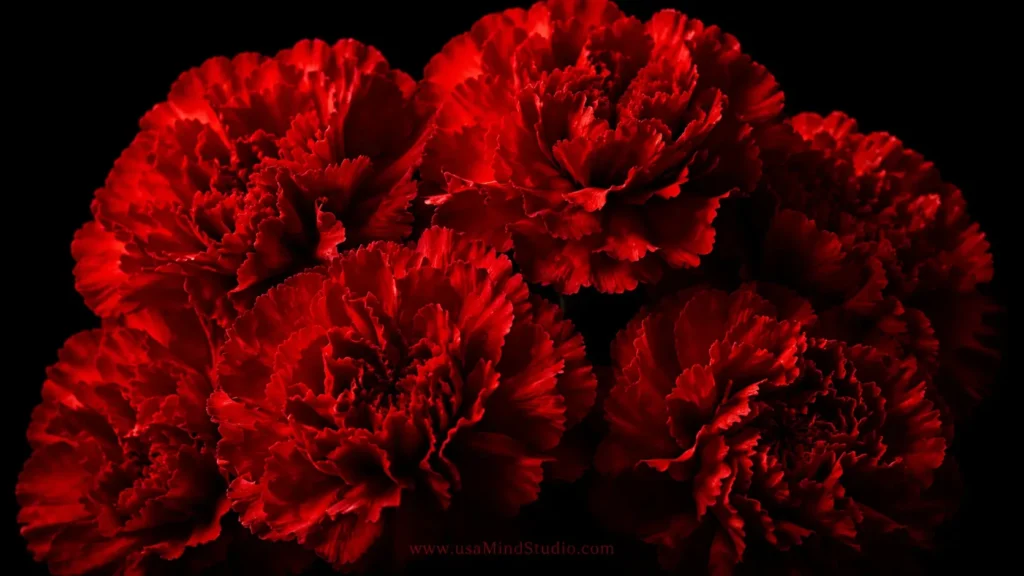
Red has a history most Americans have never heard. The red carnation is a long-standing emblem of labor movements and international socialism, worn on May Day. And in Portugal in 1974, a nearly bloodless military coup ended a dictatorship that had lasted decades. Civilians pushed carnations into the barrels of the soldiers’ rifles. It is still called the Carnation Revolution.
Yellow and purple are the honest thin spots. The meanings circulating for them are recent and informal, and no old tradition stands behind them. It is better to say so than to invent something.
Sit with the range for a second. The same flower means a dead mother in West Virginia and a toppled dictatorship in Lisbon. Nobody coordinated that. The flower is not doing anything.
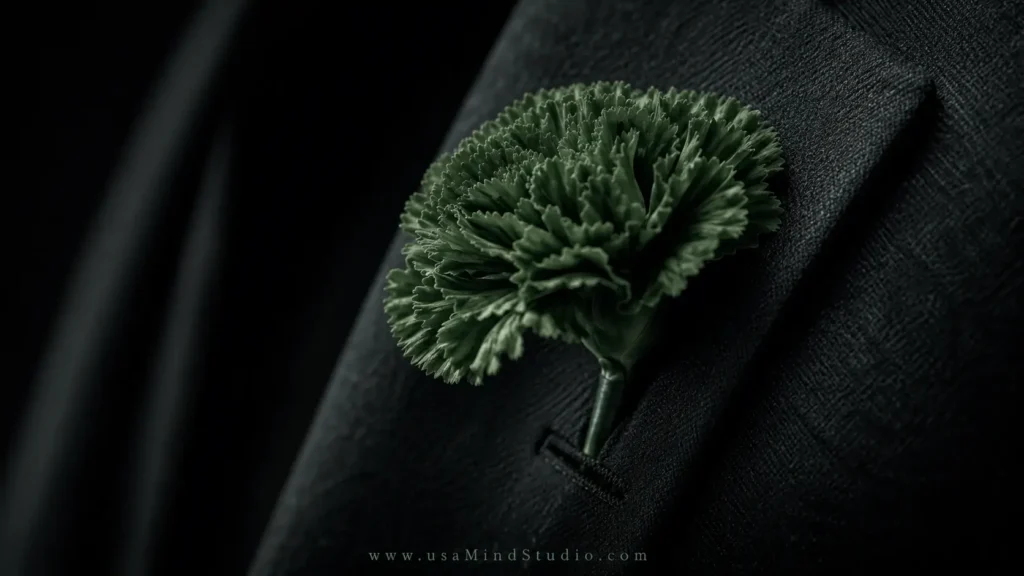
The Green Carnation
Green carnations do not grow. There is no such plant. They are white carnations with their stems sitting in dye, and the longer they soak, the greener they get.
On the opening night of Lady Windermere’s Fan, February 20, 1892, Oscar Wilde wore one. He asked several friends to wear them too, and had an actor wear one onstage. Somebody asked him what it meant. He said it meant nothing at all, and that this was exactly what nobody would guess.
Within a short time, it meant something specific. It was a signal passed between men who could not say out loud what they were signaling, in a country where saying it could send you to prison.
In 1894 a novel called The Green Carnation appeared anonymously. It was written by Robert Hichens, who had met Lord Alfred Douglas in Egypt and been introduced to Wilde. The book made the relationship obvious. It sold enormously. It was pulled from print in 1895, but not before it was raised at Wilde’s trial as evidence against him. He got two years of hard labor, came out with nothing, and died in Paris not long after. A novel he did not write helped put him there.
Notice what this flower had to be. The color had to be faked, because nature would not supply it. The meaning had to be coded, because the law would not permit it. Symbols are not always decoration. Sometimes they are the only way to say a thing at all.
What a Carnation Actually Is
The Flower of the Gods
The genus is Dianthus, built from Greek words meaning god and flower. The name goes back to Theophrastus, which puts it over two thousand years old. Carnations are among the longest-cultivated flowers on earth.
The species name caryophyllus points at the smell. Carnations smell like cloves. Really smell like them, strongly, if you get close to an old-fashioned variety. Older English names for the plant included clove pink and clove gillyflower. Before this flower meant anything at all, it was the thing that smelled like a spice most people could not afford.
The Color Is Named After the Flower
This one is worth the whole section.
Pink the color is named after the flower. Not the reverse.
Dianthus species are called pinks, and the name seems to come from those ragged, serrated petal edges, which look like they were cut with pinking shears. The flower was called a pink first. The color word came afterward, borrowed from the plant.
Every American who says the word pink is naming a carnation and does not know it.
Nobody Knows Where “Carnation” Came From
The honest answer is that scholars have not settled it. One proposal traces it to the Latin for flesh, after the pale color of the common form. Another traces it to coronation or garland, after the flower’s use in ceremonial wreaths.
Both are plausible. Neither has won. A site about where meaning comes from should be willing to say when the trail runs out, and here it does.
Put simply, carnation flower symbolism is layered. It draws on religion, folklore, art, and everyday observation, and no single meaning belongs to every culture or every person. Reading carnation flower symbolism as a prompt for reflection rather than a prediction keeps the symbol in its proper place.
Encountering a Carnation and What People Make of It
The carnation is the flower Americans buy when they are not sure what to buy. That is its own kind of meaning, and not a small one.
It is cheap. It lasts. It survives a week in a gas station bucket. And it has been quietly carrying the heaviest sentiment on the American calendar for well over a century, mostly because one grieving woman in 1908 liked what her mother liked.
Jarvis wanted people to sit down and write their mothers a letter. She said so, loudly, for forty years, and she died broke saying it.
The one thing she asked for is the one thing almost nobody does.
Editorial Reflection Note
USA Mind Studio writes about symbolism as a subject for reflection, not prediction. Nothing here forecasts events or prescribes action. Meanings differ across cultures, traditions, and people, and we try to say plainly where a meaning came from and where the record runs out. You can read more in our Editorial Policy.
Frequently Asked Questions
What flower means “I’ll never forget you”? The forget-me-not, which says it in the name. It is the most literal assignment in the whole language of flowers.
Which flower means “I am sorry”? The purple hyacinth, in most Victorian flower dictionaries. The carnation was never the apology flower, despite what many sites claim.
What flower means “I love you”? The red rose, and it is one of the few flower meanings stable enough to trust. Red carnations run a distant second.
What flower means “I miss you”? There is no settled answer. Victorian flower dictionaries contradicted each other constantly, and this phrase never landed on one plant.
Which flower means “I dare you to love me”? No reliable source supports this for any flower. It circulates online without a traceable origin, which is usually a sign it was invented.
What was Princess Diana’s favorite flower? Forget-me-nots are the flower most often reported and the one used in her memorial garden. Treat single-favorite claims about any person with some caution.
What flower symbolizes a lost loved one? In America, the white carnation, thanks to Anna Jarvis. Forget-me-nots and white lilies carry the same weight in other settings.
What is the core idea behind carnation flower symbolism? Carnation flower symbolism is built from layered history and culture rather than one fixed rule, which is why the sections above separate the documented sources from later popular claims.
Does carnation flower symbolism mean the same thing everywhere? No. Carnation flower symbolism changes from one culture, era, and personal experience to the next, and this article notes where a meaning is well documented and where it is not.
Should carnation flower symbolism be treated as a prediction? No. Carnation flower symbolism is a subject for reflection. Nothing on this site forecasts events or replaces professional advice.
Where does carnation flower symbolism come from? Carnation flower symbolism comes from a mix of religion, folklore, art, and everyday observation, and the sections above trace the main sources one by one.
Why do people search for carnation flower symbolism? People look up carnation flower symbolism when they notice the subject in a dream, a memory, or an ordinary moment and want context rather than a verdict.
Keep Reading
- Hibiscus Flower Symbolism: The Meaning Behind a One-Day Flower
- Magnolia Flower Symbolism: The Meaning Behind the South’s Signature Flower
- Lily Flower Symbolism: Purity, Easter, and a Warning for Cat Owners
- Dragonfly Symbolism: The Insect Japan Put on Armor and Europe Named After the Devil
- Cardinal Bird Symbolism: What the Red Bird Means and Why It Feels Personal