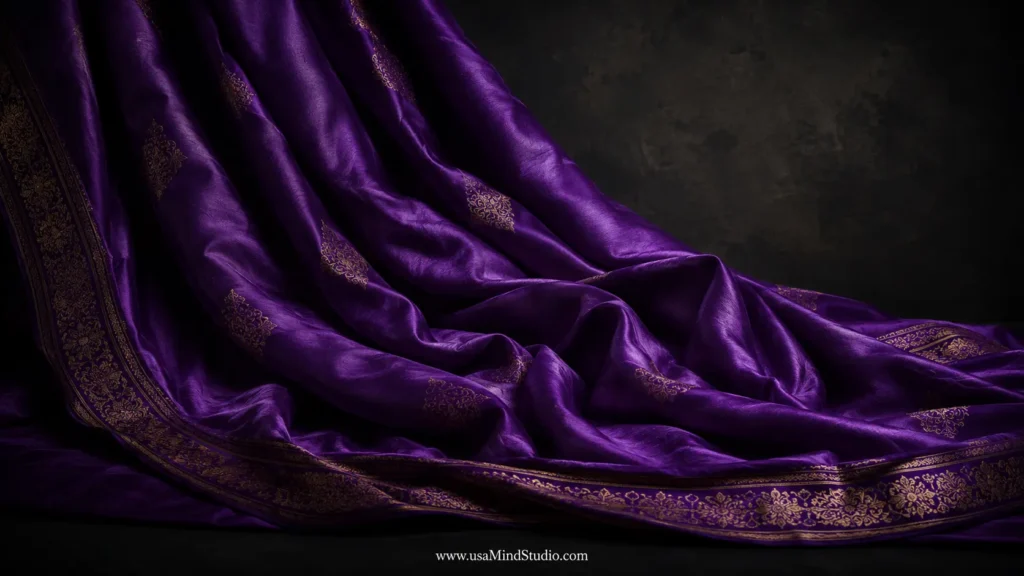
Burgundy is a color named after a wine, named after a place, named after a people, named after a hill. Pull the thread and it just keeps going. The deep red in your fall sweater traces back, word by word, to a Germanic tribe that came from what is now Sweden and whose name meant, roughly, “the high ones.” Here in the United States, burgundy shows up every autumn as the color of warmth, wealth, and quiet good taste, and almost nobody knows they are wearing the name of ancient highlanders.
This is the story of burgundy color symbolism, and unlike most colors, its story is not about a pigment. It is about a word.
This guide to burgundy color symbolism separates what history and tradition actually record from what the internet likes to repeat.
Summary
Burgundy means sophistication, wealth, warmth, and control, a grown-up and settled version of red’s loud passion. But its real story is in its name, not its chemistry. The word travels from a hill, to a Germanic tribe from Sweden, to a French region, to a famous wine, to the color itself, which was not even named until 1881. Burgundy is the last color in this series for a reason: by the time it got its name, color had become pure language.
What Burgundy Color Symbolism Means
Burgundy takes almost everything red means and turns the volume down in the best way. Red is passion, energy, and alarm. Burgundy is what happens when that red grows up, settles down, and buys nicer furniture.
The core meanings are sophistication, wealth, ambition, warmth, and control. It reads as refined where red reads as urgent. It suggests power that does not need to shout, money that is comfortable rather than flashy, and a kind of seriousness. That is why burgundy shows up on leather chairs, law office walls, luxury car interiors, and expensive wine labels. It is red with a graduate degree.
The spiritual and emotional read runs the same direction: grounding, depth, and a settled, mature strength rather than a fiery one. It is the same core idea in a calmer register. Burgundy does not spike your pulse. It steadies it.
There is a simple reason burgundy feels richer than plain red, and it goes back to another color on this site. Burgundy is red deepened with a little purple. As the purple article explains, purple spent three thousand years as the most expensive color on earth, the color of emperors. A drop of that inheritance is sitting inside every burgundy sweater. The hint of royalty you feel is not imaginary. It is the purple talking.
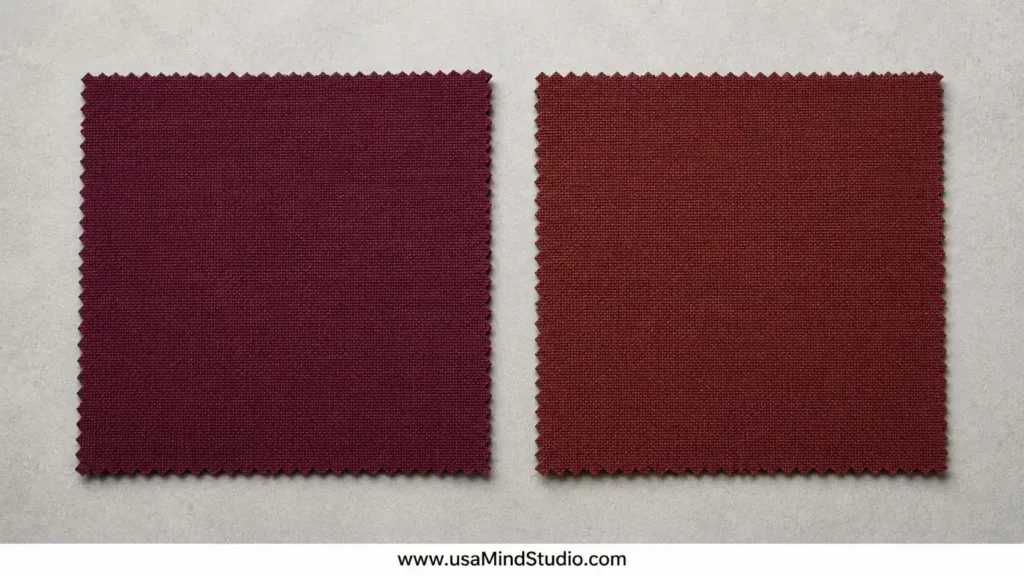
Burgundy vs Maroon: The Difference People Actually Search For
People genuinely cannot tell these two apart, and the confusion is fair, because they are close. Here is the clean version.
Burgundy leans purple. It is a red pulled toward wine, cool and jewel-like. Maroon leans brown. It is a red pulled toward earth, warmer and more muted. Put them side by side and burgundy looks like a glass of red wine while maroon looks like dried blood or an autumn leaf on its way down.
The names give the difference away, and this is the good part. Burgundy is named after the wine. Maroon comes from the French word marron, meaning chestnut. So one color is named after something you drink and the other after a nut, which is exactly why one looks purplish and the other looks brownish. The vocabulary was describing two different objects the whole time.
If you are choosing paint or a suit or a car, the quick test is easy. Hold it near actual red wine. If it belongs beside the wine, it is burgundy. If it looks browner and drier next to the wine, it is maroon.
Is Burgundy a Shade of Red?
Yes, and the honest answer is short. Burgundy is a dark red with purple mixed in. That is the whole definition.
But this small question opens onto something bigger. Nobody debates whether pink is a shade of red the way people debate burgundy, and the reason is naming. Pink and red got separate everyday words very early, so English treats them as separate colors. Burgundy got its name late, from a wine, so it still feels like a version of red rather than its own thing.
The line between “a shade of red” and “its own color” is not really about the light hitting your eye. It is about whether the color got its own word, and when. As the pink discussion in the color articles on this site shows, a color becomes its own idea partly by getting its own name.
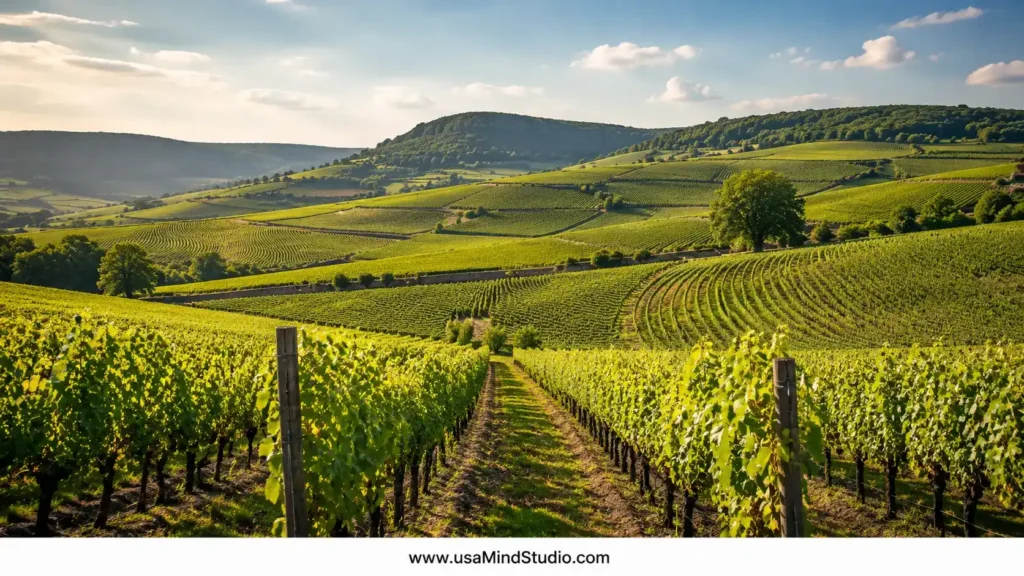
Where the Word Actually Comes From
This is where burgundy gets genuinely interesting, because the color has almost no story of its own. Its entire history is a chain of borrowed names.
The Chain
Follow it link by link. The color burgundy is named after Burgundy wine. The wine is named after Burgundy, the region of France that produces it. The region is named after the Burgundians, a Germanic people who settled there and founded a kingdom around the fifth century. And the Burgundians, according to the historical record, came originally from what is now Sweden, with a likely stop on the Baltic island of Bornholm, whose old name, Burgundarholm, means “the Burgundians’ island.”
Their name means, roughly, “the highlanders” or “the high ones.” It traces back to an ancient root meaning “high,” the same distant root that gives English a surprising family of words: iceberg, borough, burglar, and even bourgeoisie all grow from that same idea of height or a fortified high place.
So follow the whole thing. A deep wine-red color on an American sweater is named after a French wine, named after a French region, named after a Swedish tribe, named after a word meaning “high.” Not one link in that chain was ever about the color itself.
The Dates Are the Real Surprise
Here is the fact that makes this the perfect last color to look at. Burgundy was not used as a color name until 1881.
Sit with that. The wine had been called Burgundy since the 1670s, but the color did not borrow the name until 1881, which is later than the telephone and roughly the age of the light bulb. Deep purplish-reds obviously existed forever. People had been dyeing cloth this color for ages. It simply did not have this name until the wine lent it one, and very recently.
Compare that to the other colors on this site. Purple carried three thousand years of imperial weight. Blue was the last color to get a name in the ancient world and cost more than gold. Green went through a hundred years as literal poison. Orange had no name in English until a fruit arrived. Every one of those stories is about the physical struggle to make or name a color.
Burgundy has none of that. By 1881, chemistry had already solved color. Synthetic dyes could make any shade cheaply, as the purple and green articles describe. So burgundy never had to fight to exist. It just needed a name, and it grabbed one from a wine list. Burgundy is what color symbolism looks like after the hard part is over. It is pure language, borrowed and elegant, standing on top of a problem that was already solved.
Burgundy in America
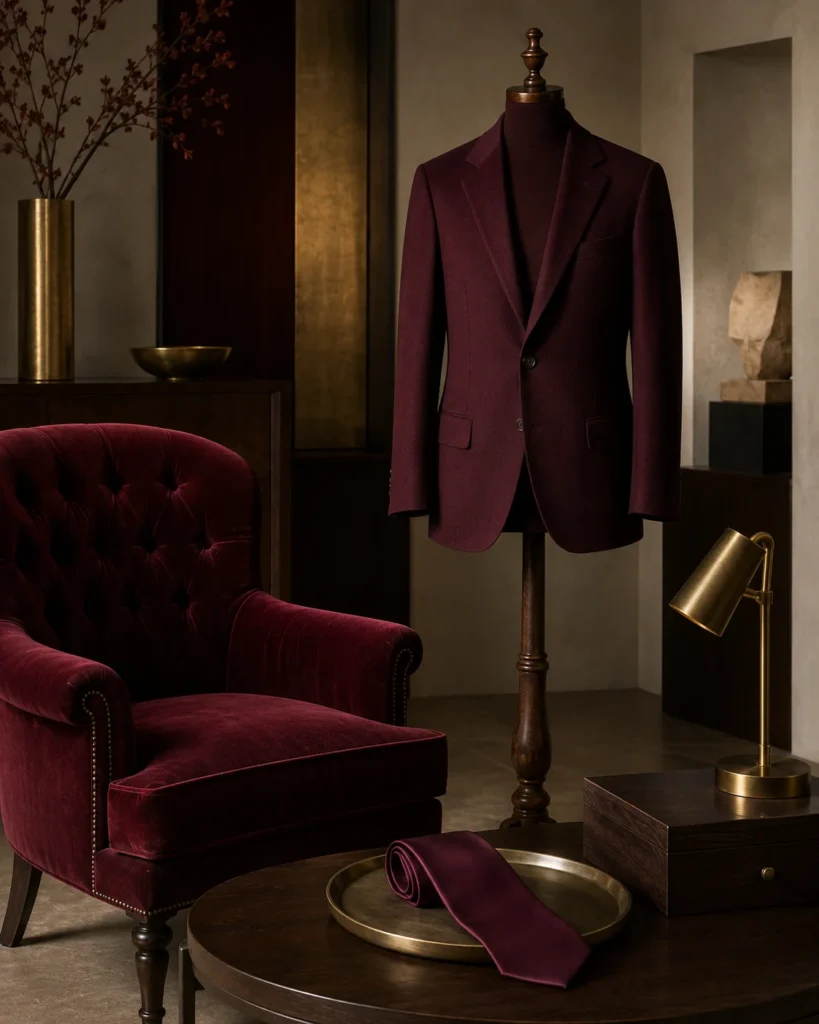
Burgundy does specific, quiet work in the United States, almost always saying the same thing: this is serious, and this is not cheap.
It is the color of choice for law firms, luxury sedans, leather-bound books, and steakhouse booths. It signals establishment money and old-fashioned quality. Marketers reach for it when they want a product to feel expensive without looking loud, which is why you see it on premium packaging and high-end labels far more than on anything aimed at children or bargain shoppers.
It also owns a season. In American fashion, burgundy is an autumn color, tied to falling leaves, harvest, and the turn toward winter. That is not an accident of taste. It is the color of the season’s dying leaves and its red wine, and it arrives in stores every September like clockwork. And fittingly, burgundy is a standard color for the leather in many high-end American cars and for the wine list at the kind of restaurant where the chairs match the drink.
Put simply, burgundy color symbolism is layered. It draws on religion, folklore, art, and everyday observation, and no single meaning belongs to every culture or every person. Reading burgundy color symbolism as a prompt for reflection rather than a prediction keeps the symbol in its proper place.
Encountering Burgundy and What People Make of It
You do not stumble on burgundy the way you stumble on a cardinal or a ladybug. Burgundy is a chosen color. Someone picked it, on purpose, for a chair or a tie or a car, precisely because of what it signals. When you notice burgundy, you are almost always noticing a decision.
So if burgundy catches your eye, the useful thing is not to ask what it means about your future. It is not telling you anything. The interesting question is what the person who chose it wanted you to feel. Wealth. Seriousness. Warmth. A little borrowed royalty from that thread of purple. Burgundy is a color that is almost always trying to tell you something on someone’s behalf.
And that is the right note to end a series of color articles on. Burgundy is the color with no natural drama at all. No poison, no fortune in snails, no missing word, no fight to exist. Just a beautiful deep red that borrowed a wine’s name in 1881 and has been quietly signaling good taste ever since. By the time burgundy came along, color had stopped being a struggle and become a language. Burgundy is that language, wearing its best jacket. It was never about the pigment. With colors, in the end, it rarely is.
Editorial Reflection Note
USA Mind Studio writes about symbolism as a subject for reflection, not prediction. Nothing here forecasts events or tells anyone what to do. Meanings differ across cultures and people, and we try to say plainly where a meaning came from and where the record runs out. You can read more in our Editorial Policy.
Frequently Asked Questions
What does the color burgundy symbolize? Sophistication, wealth, ambition, warmth, and control. It reads as a grown-up, settled version of red, suggesting power and quality that does not need to shout for attention.
What is the difference between burgundy and maroon? Burgundy leans purple, like red wine, and looks cool and jewel-toned. Maroon leans brown, like a chestnut, and looks warmer and more muted. The names come from wine and from marron, French for chestnut.
Is burgundy a shade of red? Yes. Burgundy is a dark red with purple mixed in. It feels like its own color mostly because it got its own name late, borrowed from wine rather than growing up alongside red.
Where does the name burgundy come from? From Burgundy wine, made in the Burgundy region of France, named for the Burgundians, a Germanic tribe originally from what is now Sweden. Their name meant roughly “highlanders.”
What does burgundy mean in fashion? Autumn, sophistication, and understated luxury. It arrives in American stores every fall, tied to turning leaves and red wine, and signals quality without looking flashy or loud.
Is burgundy a warm or cool color? Slightly cool for a red, because of its purple undertone. That purple hint is what separates it from warmer, browner maroon and gives burgundy its richer, wine-like feel.
When did burgundy become a color name? In 1881, long after the wine. Deep purplish-reds always existed, but the word only borrowed the wine’s name recently, once synthetic dyes had already made every color cheap.
What is the core idea behind burgundy color symbolism? Burgundy color symbolism is built from layered history and culture rather than one fixed rule, which is why the sections above separate the documented sources from later popular claims.
Does burgundy color symbolism mean the same thing everywhere? No. Burgundy color symbolism changes from one culture, era, and personal experience to the next, and this article notes where a meaning is well documented and where it is not.
Should burgundy color symbolism be treated as a prediction? No. Burgundy color symbolism is a subject for reflection. Nothing on this site forecasts events or replaces professional advice.
Where does burgundy color symbolism come from? Burgundy color symbolism comes from a mix of religion, folklore, art, and everyday observation, and the sections above trace the main sources one by one.
Why do people search for burgundy color symbolism? People look up burgundy color symbolism when they notice the subject in a dream, a memory, or an ordinary moment and want context rather than a verdict.
Keep Reading
- Purple Color Symbolism: How Snails Made It the Color of Kings
- Blue Color Symbolism: Why the World’s Favorite Color Is Barely There
- Green Color Symbolism: How the Color of Life Became the Color of Death
- Carnation Flower Symbolism: The Woman Who Tried to Own a Flower
- Dragonfly Symbolism: The Insect Japan Put on Armor and Europe Named After the Devil