Across North America, this is one of the very few animals that could genuinely kill you. It is also the animal people describe as brother. Grandmother. Mother.
This guide to bear animal symbolism separates what history and tradition actually record from what the internet likes to repeat.
We do not do that with wolves. We do not do it with mountain lions. But somewhere in the United States right now, a child is asleep holding a stuffed version of the largest predator on the continent, and nobody thinks that is strange.
That tension is where bear animal symbolism actually lives. Not in danger, and not in comfort. In the fact that we have never been able to decide which one it is.
This piece is about why. And the answer turns out to be less mystical and more physical than you might expect.
Summary
Bears symbolize strength, protection, healing, and renewal after withdrawal. Those readings come from watching the animal rather than from anything imposed on it. A bear on its hind legs looks disturbingly like a person, which is a large part of why so many traditions call it a relative instead of prey. It spends months in the ground and comes back out with life, which is the withdrawal-and-return theme stated as biology. And there is no single Indigenous meaning here, because there was never one people.
What Bear Animal Symbolism Commonly Means
Strength. Protection. Healing. Introspection. Renewal after a period of withdrawal.
That list holds up across a striking number of unrelated traditions, and it is not arbitrary. Every item on it describes something the animal actually does.
Strength is obvious. Protection comes from watching a sow with cubs, which is not a subtle display. Healing shows up because bears dig for roots and eat plants people also used as medicine. And introspection, the odd one, comes from the fact that this enormous animal disappears into a hole in the ground for a third of the year and then walks back out.
Ted Andrews, in Animal-Speak, anchors much of the modern American reading around exactly that last part. Withdrawal, then return.
Nobody had to invent any of this. They watched.
Why the Bear Reads as Human-Like
Now the part that explains the kinship, and almost nobody writes it down.
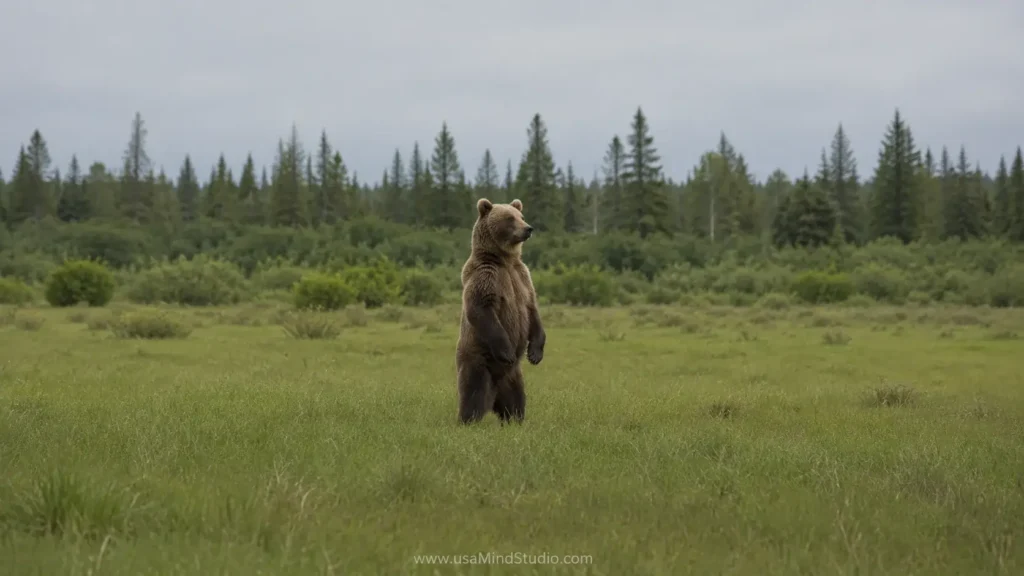
A bear standing on its hind legs is roughly the shape and height of a person. Not vaguely. Closely. It stands, it looks at you, and the outline is uncomfortably familiar.
It gets more direct than that. A skinned bear resembles a human body closely enough that people who hunted them remarked on it, repeatedly, across cultures that had no contact with each other. It is a well-documented reaction and it is not a pleasant one.
And bears eat what we eat. Berries. Roots. Fish. Honey. A bear working a berry patch is doing what a person gathering berries does, in the same place, for the same reason, and sometimes at the same time.
So here is the thing. If you meet an animal that stands like you, is shaped like you underneath, eats what you eat, and could kill you without effort, “predator” does not fully cover it. Neither does “prey.”
Relative covers it.
The kinship framing is not sentiment. It is a physical observation that a great many people made independently, and it is the single most useful key to bear symbolism there is.
The Bear in Indigenous North American Traditions
This section has to start with a correction, because almost every article about this gets it wrong in the first sentence.
There is no “Native American” bear meaning.
There are hundreds of distinct nations, with distinct languages, distinct traditions, and distinct beliefs. They do not agree with each other. Flattening them into one belief is not respectful shorthand. It throws away the actual content, which is far more interesting than the summary.
How Meanings Differ Between Nations
The specifics are documented and they are worth naming.
Among Pueblo peoples, the bear is one of six directional guardians, associated with the west and with the color blue. Zuni carvers make stone bear figures tied to healing.
Bear Clans exist across many nations, and each has its own name in its own language. According to Native Languages of the Americas, the Creek Bear Clan is Nokosalgi or Nokosvlke. The Chippewa call theirs Nooke. The Hopi call theirs Honngyam or Hona-wungwa. Bear Clans also appear among the Mi’kmaq, Menominee, Huron, Iroquois, Caddo, Osage, Navajo, and the Tlingit, Tsimshian, and Salishan peoples of the Northwest Coast, where the bear is carved onto totem poles.
Bear Dances are held among eastern nations including the Caddo, Lenape, and Iroquois.
Look at that list again. Different languages. Different regions. Different names. That is the story. Not “the bear meant strength.”
Practices and Restrictions
The rules were specific too, and they were taken seriously.
Hunting seasons were widely observed to avoid killing a mother bear with cubs. In some nations it was considered disrespectful and dangerous to insult a bear, to step on its scat, or to say its name outside of certain ritual settings.
Think about what that last one implies. You do not put a naming restriction on an animal you consider furniture. You do that for someone who might be listening.
The Bear as a Spirit Animal
The phrase deserves the same honesty.
“Spirit animal,” as most Americans use it now, is a recent framework. It borrowed language from specific Indigenous traditions, stripped out the specificity, and sold the rest. Many Indigenous people object to the casual usage, and that objection is worth stating plainly rather than tiptoeing around.
What people generally mean when they say the bear is their spirit animal is something simpler and more human: they recognize something. Steadiness. Protectiveness. A need to go quiet for a while before they can come back.
That is not a claim about assigned animals. It is a person noticing a trait in themselves and finding a shape for it.
Which is fine. It is just not the same thing as a Bear Clan, and the difference is worth keeping.
What Bears Actually Do
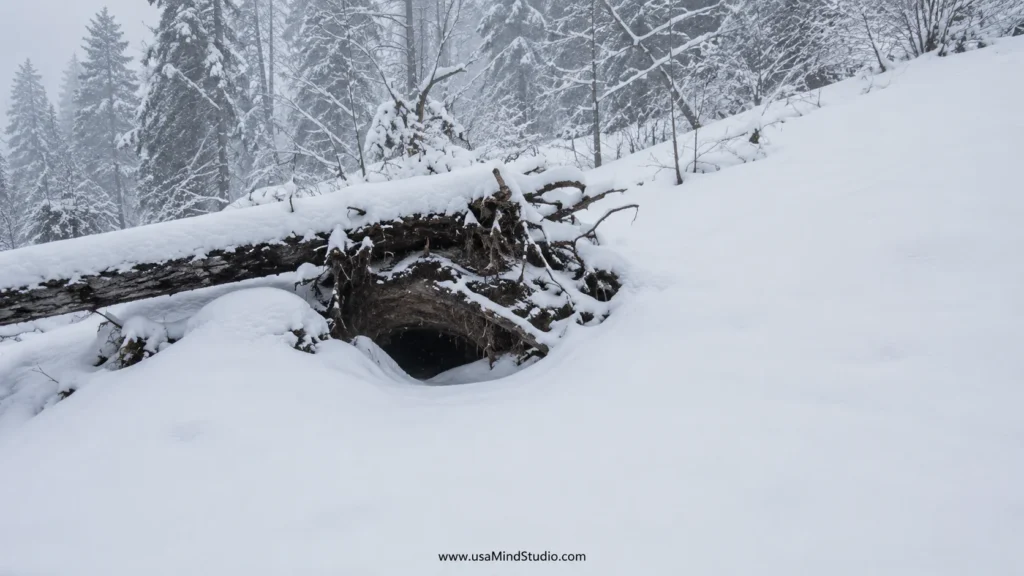
Bears are not true hibernators. That surprises most people. A chipmunk goes into real hibernation and drops its body temperature to near freezing. It takes hours to come back, shaking violently the whole way.
A bear does not do that. Its temperature falls only slightly, from around 100°F to somewhere in the high 80s or low 90s. Its heart rate drops from roughly 40 or 50 beats a minute to as few as 8.
But it can wake up instantly.
That is the difference, and it matters. The bear is never fully gone. It is in the dark, months deep, eating nothing and drinking nothing, and it can be fully alert in a second if something comes to the door.
Now the part that should stop you.
Females give birth in there. Mating happens in summer, but the embryo does not implant until December. The National Park Service notes that pregnant bears give birth in the den, usually within the first couple of months of dormancy, and the cubs nurse and grow in the dark while their mother stays down.
She goes into the ground alone in the fall. She comes out in the spring with life that was not there before.
Read that again and then read the symbolism again. Withdrawal. Darkness. Renewal. Coming back changed.
That is not a metaphor anybody laid on the bear. That is the paperwork.
The Bear in Myth and the Night Sky
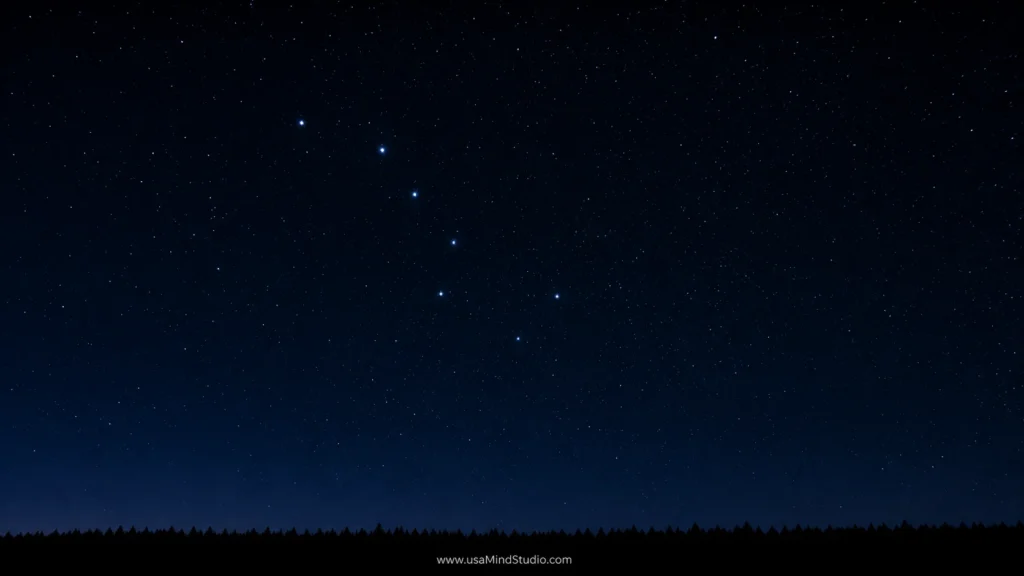
Look north on a clear night and you are looking at a bear.
Ursa Major, the Great Bear, is one of the oldest named constellations in the Western tradition. It came down through Greek myth and it is still the official name.
Here is the odd part. Several Indigenous North American nations, including the Iroquois, also tell stories about hunters chasing a bear across those same stars.
Same stars. Same animal. Two traditions that had no contact.
Scholars have argued about what that means for a long time, and it is genuinely not settled. This piece is not going to pretend otherwise. What can be said is that the convergence is real, it is strange, and nobody has closed the case.
Bear Symbolism in the United States Today
America has done something unusual with this animal, and it happened fast.
California put a grizzly on its state flag in 1911. By the 1920s there were no grizzlies left in California. The state flies an animal it finished off. The bear on that flag has been extinct in its own state for a hundred years, and it flies over the capitol every day.
Then there is the national park version. The bear as scenery. The bear as a road sign. The bear as something you photograph from a car with the window mostly up.
And then the strangest one.
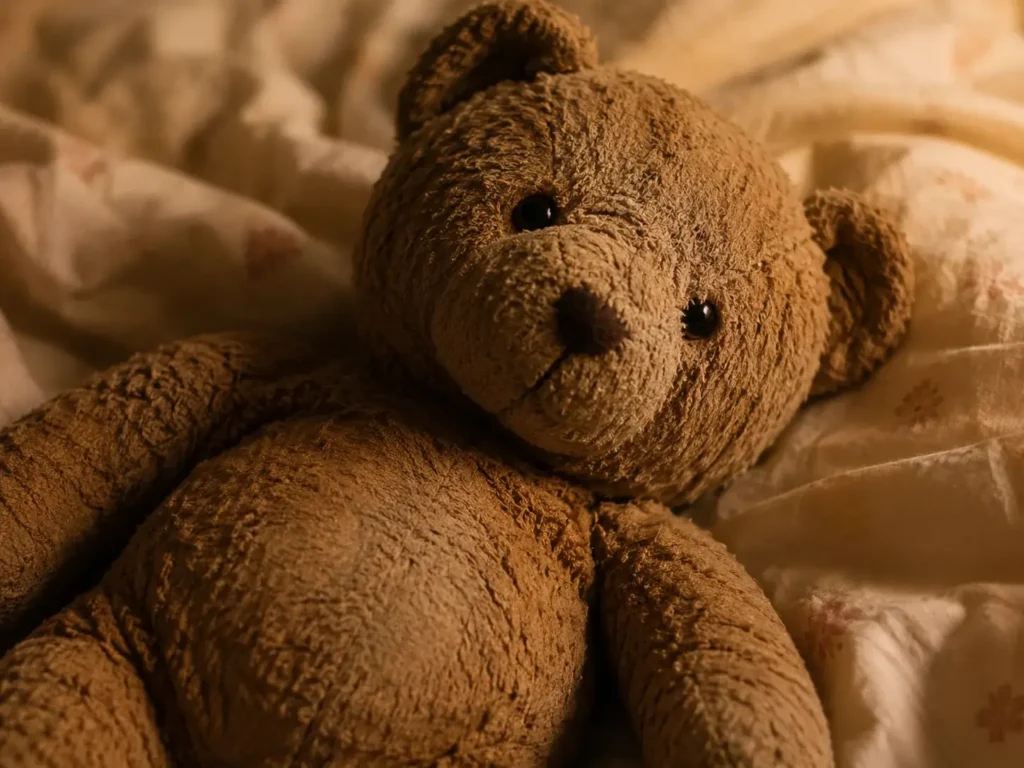
The teddy bear traces to a hunting trip in Mississippi in 1902, a president who refused a shot, a newspaper cartoon, and a Brooklyn shopkeeper who put a stuffed bear in his window and named it after Theodore Roosevelt.
Within a generation, the standard object you hand a crying child in the United States was a small soft version of the largest predator on the continent.
Think about the distance covered there. Ninety centuries of people naming this animal grandmother, treating it with caution, refusing to say its name carelessly. And then, in about a hundred years, America turned it into the thing you give a toddler at bedtime.
The bear did not change. We did. Twice.
Put simply, bear animal symbolism is layered. It draws on religion, folklore, art, and everyday observation, and no single meaning belongs to every culture or every person. Reading bear animal symbolism as a prompt for reflection rather than a prediction keeps the symbol in its proper place.
Encountering a Bear and What People Make of It
Almost nobody reading this will meet a bear. If you do, it leaves a mark, and it leaves one whether or not you were looking for meaning.
The useful question afterward is not what it was telling you. It was not telling you anything. It was going somewhere and you were in the way.
The useful question is why an animal that could hurt you produced something other than fear. Because for most people it does. There is respect in there, and recognition, and something close to embarrassment.
That reaction is old. It is older than any story about it. And it starts, most likely, with the fact that the thing standing in front of you stood up.
Editorial Reflection Note
USA Mind Studio writes about symbolism as a subject for reflection, not prediction. Nothing here forecasts events or tells anyone what to do. Meanings differ across cultures and people, and we try to say plainly where a meaning came from and where the record runs out. You can read more in our Editorial Policy.
Frequently Asked Questions
Is it good luck to see a bear? No tradition frames it that way. Bear encounters were met with respect and caution, not fortune. The luck reading is modern and thin.
Do bears symbolize love? Not traditionally. The older associations are protection, healing, and withdrawal. The affectionate reading comes from teddy bears, which are about a century old.
What are bears a symbol of in dreams? Nothing established. Dream meanings vary by person and culture. What you bring to it tends to matter more than the bear does.
What does a bear represent in psychology? No formal role. Bears appear in Jungian writing as a general figure of instinct or the mother, but that is interpretation rather than finding.
What does a female bear symbolize? Protection, and with good reason. Sows give birth while dormant and defend cubs fiercely. The mother reading describes actual behavior.
What chakra does the bear represent? None. Chakras come from Indian tradition, which has no North American bears in it. The pairing is a recent Western invention.
What is the 3 bear rule? Not a symbolic tradition. The phrase most likely refers to a hiking safety guideline or to Goldilocks rather than to any meaning system.
What is the core idea behind bear animal symbolism? Bear animal symbolism is built from layered history and culture rather than one fixed rule, which is why the sections above separate the documented sources from later popular claims.
Does bear animal symbolism mean the same thing everywhere? No. Bear animal symbolism changes from one culture, era, and personal experience to the next, and this article notes where a meaning is well documented and where it is not.
Should bear animal symbolism be treated as a prediction? No. Bear animal symbolism is a subject for reflection. Nothing on this site forecasts events or replaces professional advice.
Where does bear animal symbolism come from? Bear animal symbolism comes from a mix of religion, folklore, art, and everyday observation, and the sections above trace the main sources one by one.
Why do people search for bear animal symbolism? People look up bear animal symbolism when they notice the subject in a dream, a memory, or an ordinary moment and want context rather than a verdict.
Keep Reading
- Bat Animal Symbolism: How One Animal Ended Up Meaning Two Opposite Things
- Dragonfly Symbolism: The Insect Japan Put on Armor and Europe Named After the Devil
- Turtle Symbolism: The Animal That Carries a Calendar on Its Back
- Hummingbird Symbolism Meaning: How a Bird of War Became a Bird of Grace
- Orange Color Symbolism: The Color That Had No Name Until a Fruit Arrived