Here is something that should not be possible.
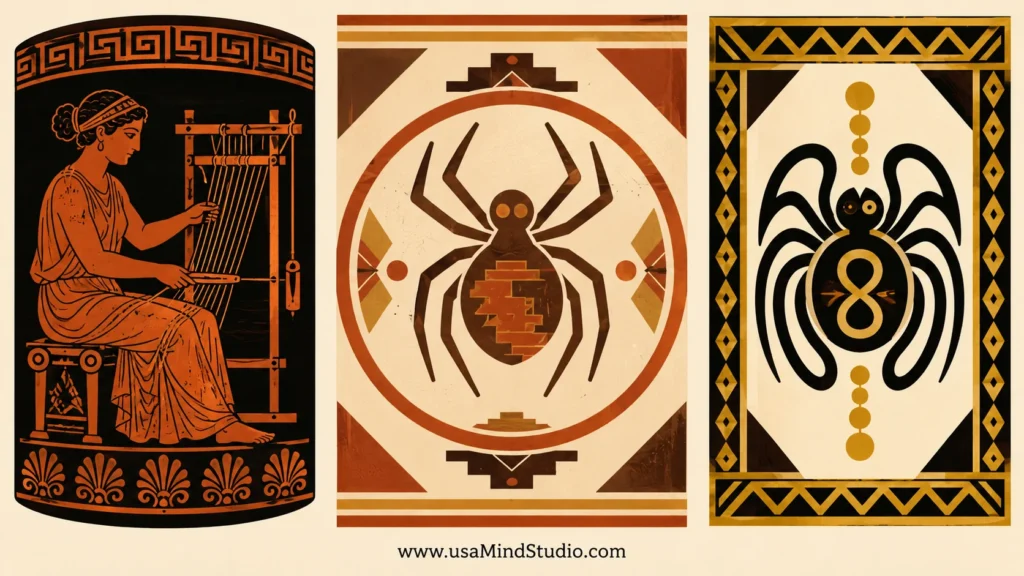
Three peoples, on three different continents, with no contact between them, watched spiders spin webs and reached three completely different conclusions about what it meant.
This guide to spider symbolism separates what history and tradition actually record from what the internet likes to repeat.
In ancient Greece, the spider was a woman punished for pride. In the American Southwest, the spider was the creator who made the first humans and taught them to weave. In West Africa, the spider was a trickster who outsmarted the sky god and stole every story in the world.
Punishment. Creation. Cleverness. Same animal, same behavior, three answers that share nothing. That is what makes spider symbolism one of the clearest windows there is into how meaning works. The spider was not sending a message. It was just spinning. Everything else was us.
Summary
The spider means creation, patience, and fate, and all of it traces to one fact: the animal makes something out of its own body. But what people concluded from that split three ways. Greece saw arrogance, the American Southwest saw a creator who gave humans the gift of weaving, and West Africa saw a clever trickster who later crossed the Atlantic with enslaved people and survives in the American South today. Even the black widow’s deadly reputation turns out to be mostly an artifact of watching spiders confined in jars.
What Spider Symbolism Commonly Means
Across almost every tradition, the spider’s core meanings are creation, patience, craft, connection, and fate.
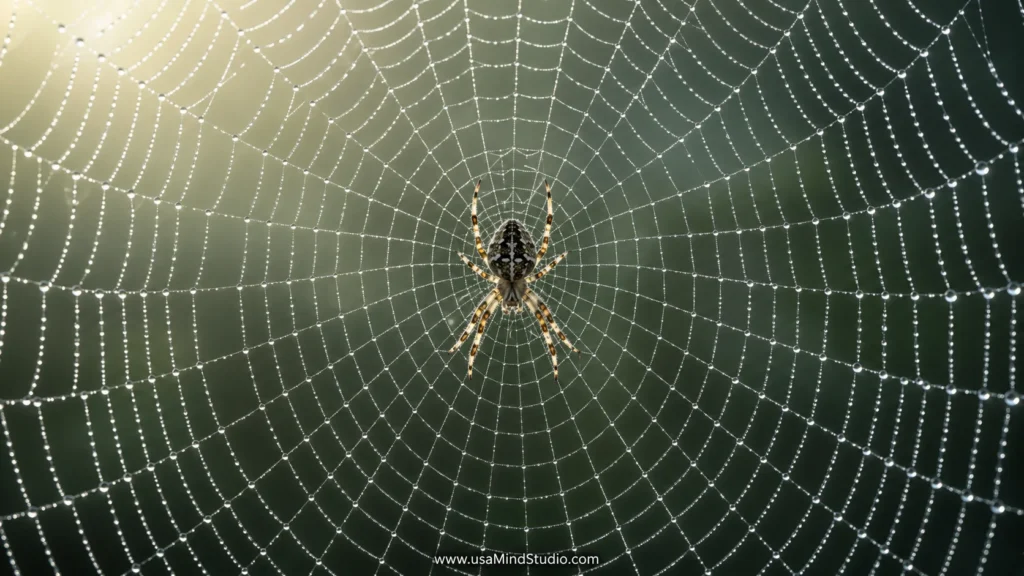
Those five come from a single fact. A spider makes silk out of its own body, then builds something with it, night after night. No other common animal produces its own material and constructs with it like that. A bird gathers a nest. A spider manufactures one.
So creation is a description of what it does. Patience comes from the waiting at the center of the web. Fate and connection come from the web itself. The popular American reading of “weaving your own life” is the same ground, and much of it traces to Ted Andrews and his 1993 book Animal-Speak. That framing is modern and thoughtful, but it is modern. The older traditions were stranger, and they did not agree with each other at all.
Three Continents, Three Spiders
Arachne and the Greek Verdict
In the Roman poet Ovid’s version, a gifted young weaver named Arachne boasts that she is better at the loom than the goddess Athena. They hold a contest. Arachne weaves something flawless, and for her pride she is turned into a spider, condemned to weave forever.
That is the Greek conclusion in one story: weaving skill is dangerous, pride gets punished, and the spider is what punishment looks like.
And it stuck to the language. The scientific name for the whole class of spiders is Arachnida, straight from Arachne. Every time a biologist says “arachnid,” they repeat a Greek moral judgment about a woman who got above her station. The verdict is baked into the taxonomy.
Spider Grandmother and the Southwestern Verdict
Now the opposite conclusion, and it comes with a necessary caution. There is no single “Native American” spider meaning. These are distinct nations with distinct languages and traditions, and they do not all say the same thing.
Among the Hopi, Kokyangwuti, Old Spider Woman, is a creator who helps form the first people from clay and leads them into this world. Among the Diné, or Navajo, Na’ashjé’ii Asdzáá, Spider Woman, taught the people to weave, and Spider Rock in Canyon de Chelly in Arizona is held to be her home. Among the Ojibwe, Asibikaashi is tied to the protective web charms that later became known as dreamcatchers.
Look at what happened. The exact act that Greece read as punishable pride, these traditions read as the highest gift. Weaving is not hubris. It is what the creator gave to humans, and the spider is the one who gave it.
And even within the region, the readings split. Among the Lakota, Iktomi is a spider trickster, male rather than maternal. So even “the Southwestern spider” is not one thing. The variation is the point.
Anansi and What Crossed the Atlantic
Then there is West Africa, and this thread runs directly into American history.
Among the Akan people of what is now Ghana, Anansi is a spider trickster. In the most famous story, he gathers up all the stories in the world from the sky god Nyame and becomes their keeper. The conclusion here is neither punishment nor gift. It is wit. The spider wins by being cleverer than everyone else, including the gods.
Here is the part that belongs to American readers. When Akan people were enslaved and carried across the Atlantic, Anansi came with them, held in memory. He survived the Middle Passage inside stories. And in the Gullah communities of the American South, in the Lowcountry of South Carolina and Georgia, Anansi became known as Aunt Nancy.
A West African spider god made it through slavery inside a folktale, changed his name, and is still there in American storytelling. It is one of the clearest surviving cultural threads between West Africa and Black America, and it traveled as a spider.
Three peoples watched the same small animal make thread and build something. Greece saw arrogance, the Southwest saw creation, West Africa saw wit. The spider never varied. Only the people did. If you want a clean demonstration that symbols are made rather than found, this is it.
Spider Colors: White and Black
People search for the meaning of white spiders and black spiders, so it is worth saying what those colors actually are.
Color in spiders is mostly a matter of species, and sometimes circumstance. That small white spider on a flower is very likely a crab spider, and some can slowly shift between white and yellow to match the flower they hunt on. That is camouflage for catching bees, not a message for you. Black spiders are simply the many species that happen to be black.
People do attach meanings, white for purity or good news, black for mystery or warning. But unlike Arachne or Spider Woman, these are recent and informal, borrowed from what white and black already mean to us in general. That is its own subject over in color symbolism.
The Black Widow Spider Symbol
The black widow is a case where the name is doing the symbolic work, and the name came from an assumption.
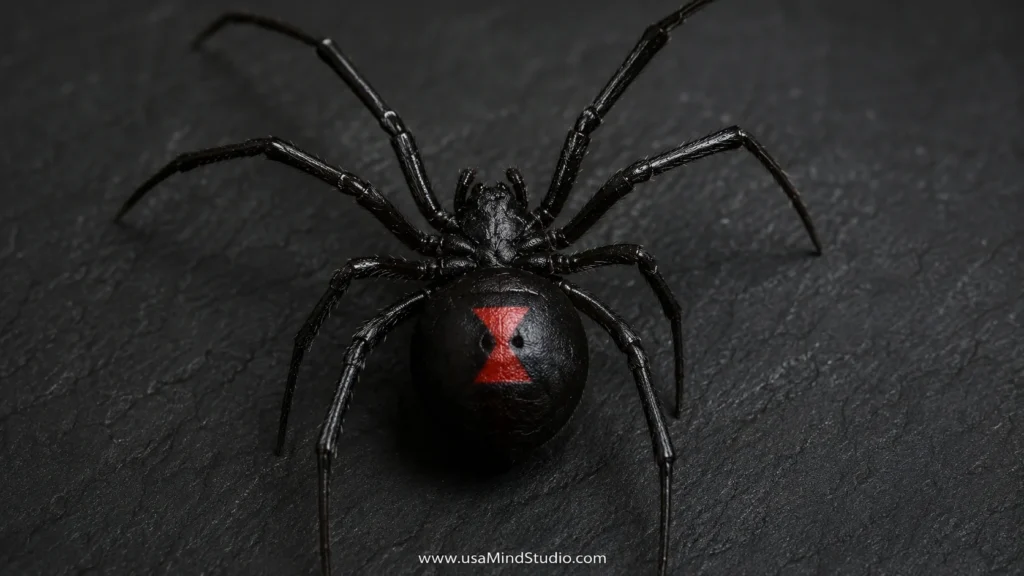
The females carry a red hourglass on the underside and are genuinely venomous. But the name comes from a belief: that the female reliably kills and eats the male after mating.
Here is the correction, and readers of the wolf article on this site will recognize its shape immediately. That mate-eating behavior is far less common in the wild than the name suggests. Much of the reputation comes from watching these spiders in jars and small enclosures, where a male that would normally leave has nowhere to go. Confine two animals with no exit, watch what happens, and name them after it. It is the same error that produced the myth of the alpha wolf.
Then the symbol flowed backward into the language. “Black widow” is now something you call a person, usually a woman, long before it is something you call a spider. The animal lent its name to a human archetype it does not earn. (And some people searching “black widow” want a film character, not the animal. This section is about the spider, which was here first.)
Spider Bible Symbolism
The honest answer to whether spiders are in the Bible depends on which Bible you are reading.
Spiders do appear, usually as an image of fragility. The spider’s web stands for something built with great care that comes to nothing. Job and Isaiah both use it that way, with a Hebrew word, akkabiysh, that clearly means spider.
But there is a famous complication. In Proverbs 30:28, the King James Version reads, “The spider taketh hold with her hands, and is in kings’ palaces.” Modern translations like the ESV and NIV render that same verse as “lizard.” The underlying Hebrew word, semamith, is uncertain, appears only once, and Rabbinic opinion was genuinely split. Whether there is a spider in that verse at all is a translation decision, not a settled fact, which means the symbol may have entered the text in England in 1611 rather than in the original.
One more thing, told carefully. There is a well-known story about a spider spinning a web across a cave mouth to hide someone fleeing for their life, so pursuers assume no one went in. It is a lovely story, and it is not in the Bible. Versions attach to David hiding from Saul, to the Prophet Muhammad in Islamic tradition, and to Robert the Bruce in Scotland. One traveling story, three traditions, none of it scripture.
What Spiders Actually Do
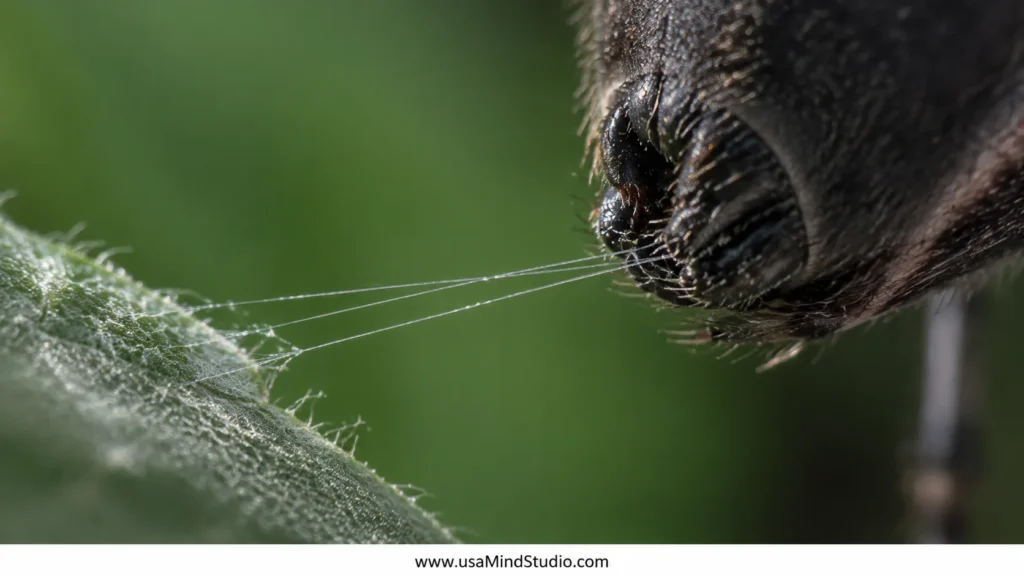
A spider makes silk inside its own body and spins it out to build, and in many species it eats its old web and rebuilds a fresh one. That single ability, making something from yourself and constructing with it, is what the creation and fate symbolism has always been describing. A web is also a record, a physical map of every decision the spider made while building it. That is much of why so many cultures read the web as a kind of writing.
Two smaller facts round it out. The great majority of spiders are harmless to people, and they quietly eat enormous numbers of the insects that do bother us, so the thing in the corner is usually on your side. And spiders do not extend their legs with muscle. They pump fluid into them under pressure, which is why a dead spider curls up. The animal so many cultures made into a symbol of control is, mechanically, running on hydraulics.
Put simply, spider symbolism is layered. It draws on religion, folklore, art, and everyday observation, and no single meaning belongs to every culture or every person. Reading spider symbolism as a prompt for reflection rather than a prediction keeps the symbol in its proper place.
Encountering a Spider and What People Make of It
The spider in the corner of the room is one of the most common wildlife encounters in an American home. And the reaction it produces, whatever yours is, was almost entirely handed to you. Some people were raised to squash it. Some were raised to carry it outside in a cup. The spider is doing the same thing either way.
If a spider turns up in a dream, or a doorway, and stays with you, the useful question is not what it is trying to tell you. It is which of the three spiders you inherited: the punished weaver, the creator, or the clever survivor. Whatever you feel when you see one, you learned it, the same way the Greeks and the Hopi and the Akan each learned something completely different.
The spider is one of several animals people both fear and admire. For two more, see the bat and the wolf, which are read as threats in some stories and as protectors or teachers in others.
Editorial Reflection Note
USA Mind Studio writes about symbolism as a subject for reflection, not prediction. Nothing here forecasts events or tells anyone what to do. Meanings differ across cultures and people, and we try to say plainly where a meaning came from and where the record runs out. You can read more in our Editorial Policy.
Frequently Asked Questions
What does a spider symbolize in a dream? Nothing fixed. Dream meanings vary by person and culture. What you bring to the spider matters far more than the spider does.
Is the spider mentioned in the Bible? Yes, as an image of fragility in Job and Isaiah. A third verse, Proverbs 30:28, is translated “spider” or “lizard” depending on the version.
Who is Spider Grandmother? A creator figure in Hopi tradition, Kokyangwuti, who helps form the first people. Related weaver figures appear among the Diné and other nations.
Do black widow spiders really eat their mates? Sometimes, but far less often in the wild than the name implies. Much of the reputation comes from spiders confined together in captivity.
Are spiders a good omen? No tradition settles that. Some cultures welcomed them as creators, others feared them. The meaning was always assigned, never a property of the animal.
What do spiders symbolize in Greek mythology? Punishment for pride. Arachne was turned into a spider for challenging Athena at weaving, which is where the word “arachnid” comes from.
What goddess is associated with spiders? Athena in Greek myth, through the Arachne story. In the American Southwest, Spider Woman is a creator figure among the Hopi and Diné.
What is the core idea behind spider symbolism? Spider symbolism is built from layered history and culture rather than one fixed rule, which is why the sections above separate the documented sources from later popular claims.
Does spider symbolism mean the same thing everywhere? No. Spider symbolism changes from one culture, era, and personal experience to the next, and this article notes where a meaning is well documented and where it is not.
Should spider symbolism be treated as a prediction? No. Spider symbolism is a subject for reflection. Nothing on this site forecasts events or replaces professional advice.
Where does spider symbolism come from? Spider symbolism comes from a mix of religion, folklore, art, and everyday observation, and the sections above trace the main sources one by one.
Why do people search for spider symbolism? People look up spider symbolism when they notice the subject in a dream, a memory, or an ordinary moment and want context rather than a verdict.
Keep Reading
- Ladybug Symbolism: Luck, Our Lady, and a Warning in Red
- Cat as a Symbol: Why Black Cats Mean Opposite Things in Two Countries
- Bear Animal Symbolism: The Only Predator We Call Grandmother
- Blue Color Symbolism: Why the World’s Favorite Color Is Barely There
- 1010 Angel Number: What 10:10 Symbolizes and the Real Reason You Notice It