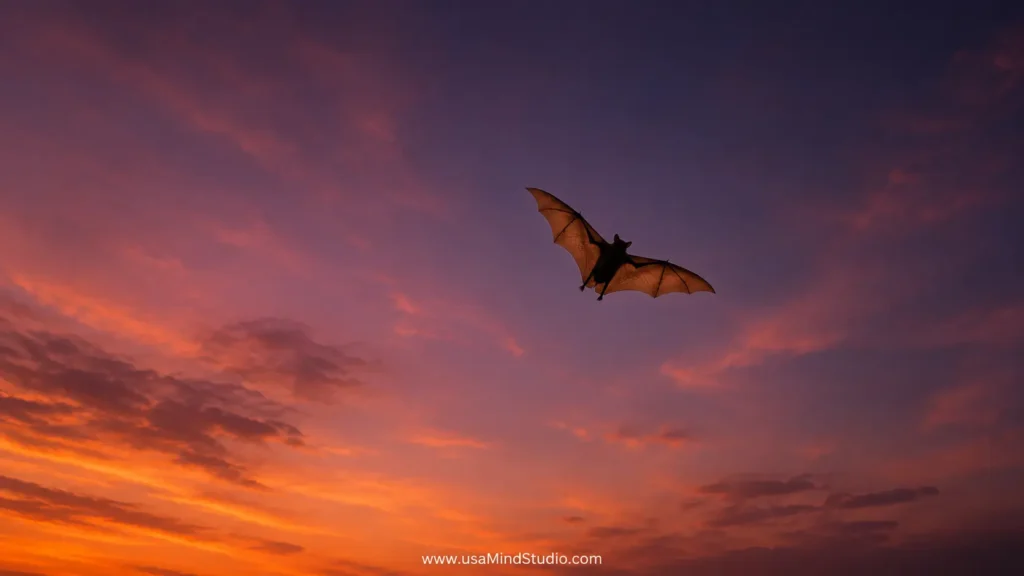
In the United States, a bat means Halloween. Haunted houses. Something in the attic you would rather not deal with.
This guide to bat animal symbolism separates what history and tradition actually record from what the internet likes to repeat.
In China, the same animal has meant good fortune for centuries. People hang bats on their doors at New Year. Grandmothers put bat-shaped jade buttons on babies’ caps.
Same animal. Opposite meaning.
And here is the part that should stop you: the reason has nothing to do with bats. Bat animal symbolism in China turns on a coincidence of pronunciation. A pun did this. That is the whole mechanism, and it is one of the clearest looks you will ever get at how a symbol actually gets made.
Summary
The bat is the best example this site has of a meaning that came from an accident. In Chinese, the word for bat sounds like the word for good fortune, and that homophone eventually turned a creature people had found unsettling into a blessing. Europe never got the pun, so its bats stayed sinister. Meanwhile the animal itself is one of the most useful things flying over American farmland. The bat did not change. The languages did.
What Bat Animal Symbolism Commonly Means
The associations that turn up again and again across unrelated traditions: night, transition, rebirth, and perception without sight.
Those are not arbitrary. They are what the animal does. It appears at dusk, in the gap between day and night. It disappears into caves and comes back out. And it navigates a dark world by hearing rather than seeing, which is genuinely strange and genuinely visible if you watch one hunt.
The rebirth reading has a physical root too. A bat vanishes into a cave, goes still for the cold months, and comes back out when the weather turns. A person watching that happen, year after year, without any way to see inside the cave, is going to land on death and return. It is the same logic that put the same meaning on the bear and the butterfly. Disappearance followed by reappearance reads as resurrection to almost everyone who watches it, because that is what it looks like.
Where traditions split is on whether any of that is good.
Ted Andrews, in Animal-Speak, frames the modern American reading around transition and facing the unknown. That is the gentle version. Animal symbolism around the bat has not always been gentle, and this piece is about why.
The Bat Became Lucky Because of a Pun
The Word
In Chinese, the word for bat and the word for blessing or good fortune sound the same. Different characters, same sound.
So to say bat is to more or less say fortune. A bat flying overhead reads as fortune flying in. Not as a metaphor. As a sound.
That is it. That is the entire foundation.
But China Did Not Always Like Bats
Here is the part almost every article about this gets wrong, and it makes the story much better.
You will read that China has revered the bat for thousands of years. That is not quite right.
Ancient Chinese writers found bats about as unsettling as Europeans did. A poet in the Three Kingdoms era wrote about them as creatures with an evil air, odd shape, and strange habits, awake all night and hanging upside down all day. That reads exactly like a medieval European complaint.
The shift came much later. Bat Conservation International, which is based in Austin and knows this material well, dates the association with longevity to the sixteenth century.
So both cultures started in roughly the same place. Both looked at a bat and felt uneasy.
Then one of them noticed the word sounded like fortune, and changed its mind.
The Five Blessings
Once the pun took hold, it did an enormous amount of work.
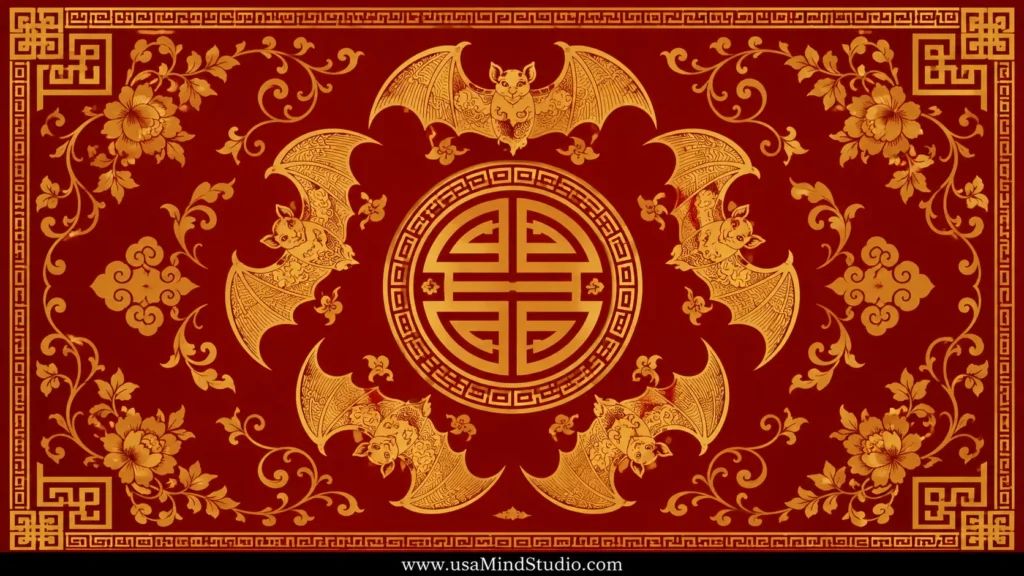
Five bats together came to represent the Five Blessings: virtue, health, long life, wealth, and a peaceful death. Five is an auspicious number, and the motif turns up on robes, porcelain, jade, and gifts.
The wordplay kept going. Two bats facing each other means double luck. Bats are drawn among clouds because the word for cloud is also a fortune homophone. Qing dynasty women wore hairpins with bats and gourds to encourage conception. Bats appear beside butterflies on wedding presents.
And the upside-down bat is the best of it. Bats roost inverted. The word for upside-down sounds like the word for arrived. So an inverted bat reads as fortune has arrived, which is why you will hear someone say your fortune character is upside down and mean it as a compliment.
None of that is about bats. Every step is about how the words sound.
Where Western Fear of Bats Came From
Europe never got the pun, so nothing interrupted the first impression.
From roughly the fourteenth century, European tradition tied bats to witchcraft and the devil. The nocturnal habits did some of the work. The dark coloring did more. Later, vampire literature arrived and welded the association shut.
None of this was a discovery about bats. It was a mood, written down repeatedly until it hardened.
The vampire link is worth pausing on, because most people assume it runs the other way. Bats did not make people think of vampires. Vampire folklore came first, and it was about people, not animals. The bat got recruited into it later, mostly in the nineteenth century, once Europeans learned that a few species in the Americas actually do drink blood. The name vampire bat came from the legend. The legend did not come from the bat.
The point is not that Europe was wrong and China was right. Neither was doing observation. One culture had a coincidence available and used it. The other did not. And once a mood like that sets, it is remarkably hard to shift, which is why a farmer whose crops the bats are protecting will still flinch when one crosses the porch light.
Bat Symbolism in the United States
America inherited the European version. Halloween, haunted houses, the bat as visual shorthand for unease. That is not an American invention. It came over on a ship, like a lot of what this country believes about animals.
But something else is happening here, and it is worth knowing about.
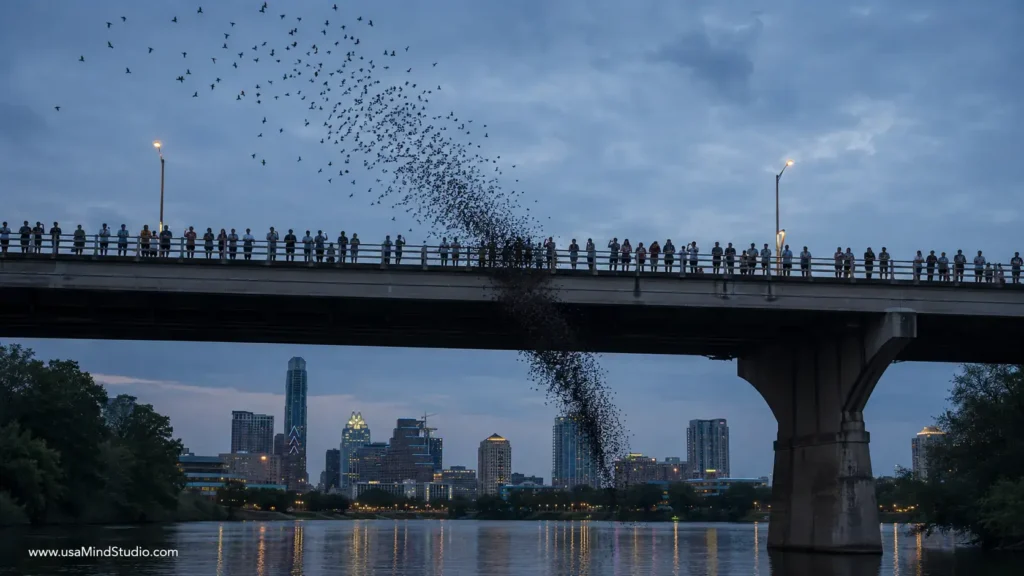
Every evening in Austin, Texas, a large colony of Mexican free-tailed bats pours out from under a downtown bridge. And people gather to watch. Not to complain. To watch. There are viewing spots. It draws crowds.
A city took Halloween’s mascot and made it a civic attraction. Nobody set out to change what bats mean in America. It happened because a bridge got rebuilt with gaps the right size, bats moved in, and enough people decided it was worth showing up for.
That is a symbol shifting in public, in real time, in an American city. Most articles about bat symbolism will tell you what bats meant to somebody in the 1400s. This is what they are coming to mean now, and you can go stand on the bridge and watch it happen.
The Bat as a Spirit Animal
The phrase deserves a straight answer.
“Spirit animal,” as most Americans use it, is a recent framework. It borrowed language from specific Indigenous traditions and left the specifics behind. Plenty of Indigenous people object to the casual usage, and that is worth saying rather than working around.
What people generally mean when they call the bat their spirit animal is not a claim about assignment. It is recognition. Navigating a period they cannot see through. Trusting a sense other than sight. Being comfortable somewhere other people are not.
Those readings track the animal. They are just modern, and honesty about that costs nothing.
What Bats Actually Do
Now the part that makes both traditions look small.
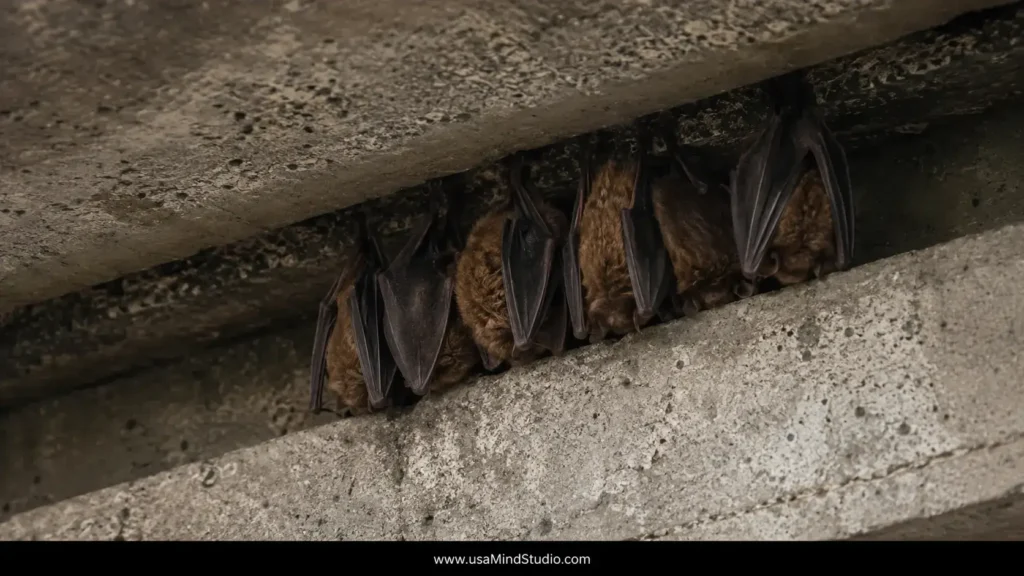
Bats are the only mammals capable of true flight. Not gliding. Flight. A flying squirrel falls with style. A bat flies.
They navigate by echolocation, throwing sound out and reading what comes back. Some species can detect an object as fine as a human hair that way. The animal builds a picture of a dark room out of returning noise, which is a stranger ability than anything either tradition attached to it.
And they work for us, at a scale most Americans have no idea about.
According to the U.S. Fish and Wildlife Service, bats eat enough crop pests to save more than a billion dollars a year in the American corn industry alone. Across all US agriculture, the figure is more than three billion. They also pollinate. Bats are the only pollinator of the agave plant, which means bats are the reason tequila exists.
Sit with that against the Halloween decorations.
Here is the whole argument in one line. Nearly every trait that made bats frightening to medieval Europe is the same trait that made them fortunate in China and useful to a farmer in Iowa. Night flying. Cave dwelling. Hanging upside down. Silent movement.
The animal never changed. The framing did, three separate times, in three separate places, for three reasons that had nothing to do with the bat.
Put simply, bat animal symbolism is layered. It draws on religion, folklore, art, and everyday observation, and no single meaning belongs to every culture or every person. Reading bat animal symbolism as a prompt for reflection rather than a prediction keeps the symbol in its proper place.
Encountering a Bat and What People Make of It
A bat in the house produces a reaction. So does one overhead at dusk. Most people flinch, and most people would tell you the flinch is about the bat.
It is not. It is about the fourteenth century.
Worth knowing, if only as a reframe: in Chinese tradition, a bat choosing your home is a compliment. Fortune has flown in. Same bat, same house, same evening, opposite conclusion.
You do not have to adopt that reading. But it is useful to know that the feeling you get is not information about the animal. It is information about where you were born.
The bat is not the only animal that flips between fear and good fortune depending on who is looking. The cat as a symbol and the dragonfly both carry meanings that change from one culture to the next.
Editorial Reflection Note
USA Mind Studio writes about symbolism as a subject for reflection, not prediction. Nothing here forecasts events or tells anyone what to do. Meanings differ across cultures and people, and we try to say plainly where a meaning came from and where the record runs out. You can read more in our Editorial Policy.
Frequently Asked Questions
Are bats blind? No. Most bats see perfectly well. Echolocation is an addition to sight, not a replacement, which makes the phrase blind as a bat wrong twice.
Is a bat a bad omen? No tradition supports that as a fact. It is a European inheritance. In China the same sighting has read as fortune arriving.
What does it mean when a bat flies into your house? That a bat found an opening. In Chinese tradition it reads as a compliment. In America it usually reads as a problem to solve.
What does a bat symbolize in dreams? Nothing established. Dream readings vary by person and culture, and what you bring to it matters more than the animal does.
Are bats mentioned in the Bible? Yes. Old Testament dietary lists name the bat among unclean birds, which is a classification error, since bats are mammals.
Why are bats associated with vampires? Vampire literature borrowed the bat, not the other way around. Three bat species do feed on blood, and none of them live near Transylvania.
How long do bats live? Longer than you would expect for their size. Some species pass thirty years, which is likely part of why Chinese tradition tied them to longevity.
What is the core idea behind bat animal symbolism? Bat animal symbolism is built from layered history and culture rather than one fixed rule, which is why the sections above separate the documented sources from later popular claims.
Does bat animal symbolism mean the same thing everywhere? No. Bat animal symbolism changes from one culture, era, and personal experience to the next, and this article notes where a meaning is well documented and where it is not.
Should bat animal symbolism be treated as a prediction? No. Bat animal symbolism is a subject for reflection. Nothing on this site forecasts events or replaces professional advice.
Where does bat animal symbolism come from? Bat animal symbolism comes from a mix of religion, folklore, art, and everyday observation, and the sections above trace the main sources one by one.
Why do people search for bat animal symbolism? People look up bat animal symbolism when they notice the subject in a dream, a memory, or an ordinary moment and want context rather than a verdict.
Keep Reading
- Dragonfly Symbolism: The Insect Japan Put on Armor and Europe Named After the Devil
- Turtle Symbolism: The Animal That Carries a Calendar on Its Back
- Wolf Symbolism: The Alpha Wolf Was Never Real, and Here Is What Is
- Rose Color Meanings: The Flower Whose Messages Keep Changing
- Lotus Flower Symbolism: What the Mud Actually Teaches